What will be, was

I picked up a little box of cards at a party recently that had little conversation topics written on them. I thought they would make interesting writing prompts.

#1  Which school subjects do you think will be useful and which will be useless?

At the time, I thought school was boring and a waste of time. There were some classes that made sense to me, like Art and English. I enjoyed French but that was mostly because the two French teachers we had at Novato High in the late 60’s were lively and interesting people.

Our French teachers were polar opposites. Miss Morin was stout, portly, and her personality was warm and kind, motherly to go with her big body, a Venus of Wallendorf. She wore her black hair in a French roll at the back and dark clothes like a French peasant. I trusted her and visited her at her home once, just dropped in during my senior year. Rumor had it that she was a lesbian because she lived with a woman roommate and hadn’t married. It was 1968 and I didn’t really know what a gay person was. There was curiosity attached to the rumor, nothing malicious.

I have forgotten the other French teacher’s name. She was tall and thin and energetic and a lot of fun. She wore calf-length flowered dresses and had long reddish hair that was out of control. It waved and curled past her shoulders. My feelings for her were more volatile and unexpected. I wanted her approval so actually I did some of the homework assignments.. I would mess around exaggerating the rolling “r’s,” parodying her a little. She told me I had a very good accent.

Miss Robb, the art teacher was a small woman, too, but she had a layer of baby fat that made her look young, even to us. She wore her hair very short and taught us all kind of things. She ran the class like a survey course in all the arts and crafts. She taught us to to copper enamel. I still have a piece I made on a penny with an astrological sign on it. She also had us do a light show. She brought in a bunch of exposed 35mm film and we scratched and painted on it. We  mixed colored oil and water and mushed it around in dishes on the overhead projector. When my team gave its presentation I was supposed to give my partner a cue by passing my hand over the oily mess but he didn’t start the movie projector. I cued him again and still nothing. Finally I said, go! Turned out that he was waiting for me to shut off the overhead. In the critique someone pointed out that there were too many hands flashing through my part of the show.

I was interested in making jewelry so one day after school Miss Robb took me to Berkeley to an art store on University Avenue. Neither of us had made any plans for me to get home and there were no buses between Novato and Berkeley. Besides I had no money. I don’t remember how I got home. She might have driven me there.

2001, the movie, came out while I was in High School. One of the male teachers, I don’t remember what he taught. I was wary of him because he had a lot of groupies hanging around him. He held a whole class on the movie 2001. His thesis was that it was a representation of  an acid trip and that the world was going to become a better, more enlightened place if everyone took a trip. I think he got fired and then rehired due to student protests. Maybe I am making that up. There was some fuss about him for encouraging students to rebel and rumors that he took acid.

Mr. Burger, my geometry teacher was pretty cool. He was in the process of building a house in the hills of Marinwood that didn’t have any 90 degree angles. It was designed by Frank Lloyd Wright. I wonder how he got the money for that. I always struggled with math, but geometry was easy for me. I have no idea how I got through algebra to get into geometry class. After we had been working with the various formulas he gave us the assignment to make a geometry puzzle. I drew circles and lines and plugged in every formula we had learned up to that point into a diagram. He put mine on the board and solved a lot of the puzzles but gave up before he finished them all. I enjoyed being singled out but disappointed that he didn’t finish. I felt like his inability to figure it out was my failure, not his.

I just realized that if he had answered the questions in order he would have been able to solve the whole puzzle. The answers to some of the questions were dependent on the answers to earlier questions. I just now thought that. After 49 years I figured out why he had to stop. (Just to give you an idea of my math skills I had to write down on paper the 2018 minus 1969 problem and I had problems with all the zeros. I forgot how to carry.)

That was the second time something like that happened.

When I was in 7th grade I wrote a fairy tale for my English class. It was a jokey thing and I made up some elaborate names for the characters. The teacher would read one of the stories out loud to the class on Friday afternoons. She told me, maybe in front of the class, that she would have read my story except that she couldn’t pronounce the names. I felt cheated.

When I was in high school I wanted to be a scientist and write poetry. My counselor told me that I should take typing so that I could be a secretary. I refused. The idea of working in a an office was disgusting. I wouldn’t join the squares and work for the military-industrial complex! Of course computers cured me of that typing bias and I have worked in offices of one sort or another my whole working life. Much more interesting than I expected. Even data entry has its charms, it’s a lot like paid knitting or playing solitaire where it isn’t cheating if you sort the deck if it doesn’t work out.

My political views were full of teen confusions, foggy even, but I really did believe that the War in Vietnam was a horrible, terrible, vicious example of how stupid the government was, that the war was run by a bunch of heartless generals. The tv show M.A.S.H. said it all for me.

In a political science class we played a global simulation game. Without naming the countries we had been given, we were to solve the puzzle of how to avoid nuclear warfare during the Korean War. I don’t think the disguise of giving the countries new names was necessary because hardly anyone knew what the Korean War was. We were randomly assigned to “countries” and given roles to play within that country. We were given the situation and allowed to play it out. I handled the agricultural department of my country. I thought that it was a dumb role. Who cares about food production? (My only justification for my ignorance was that I was in school to learn such things. Later when I heard about the food production problems in China I remembered my little rebellion and wondered what was in my portfolio.) In the meeting of my country’s departments I saw that my fellow countrymen didn’t have a clue how to proceed. They were very confused and I am not sure they understood the assignment. There wasn’t even any horsing around, just muddle. I’ve never been very patient with muddle.

Since I thought I was a minor player and had no stakes in the game, I decided to defect. I packed my folder of agricultural materials and moved to the table where North Korea was trying to figure out how to stop the Chinese from invading. What a shockwave that created. The teacher was called in to adjudicate but he (or she) said there was no rule against defecting and let my defection stand. If there had been a CIA recruiter spying on us he would have rejected me right then. Maybe even busted me.

But I was suspicious of all kinds of fanatics, gurus, and born agains. I resented people who told me what to think and people who didn’t think like I did. School was just another system for soul crushing. If it wasn’t painful it was boring. Mostly boring.

I had a friend who became a born again Christian and he and  I had a long series of arguments about how his beliefs were illogical. I think we only succeeded in hardening our own convictions without opening our minds to other ways of seeing things. Mike. His name was Mike. We didn’t have anything to talk about after we reached the impasse of the faith vs. reason conversation. I had felt animated by our talks but I think he felt bullied. He was probably right. I held the Hewitt convictions coupled with an inability to listen. I had to fix things. If I couldn’t fix them I was willing to toss them aside, to break them further.

One of the teachers at my high school was Harvey Susser. We were supposed to call him Mr. Susser but those who took his drama classes called him Harvey. I was not a Dramie, I was a Hippie, so I didn’t take any classes from him until I was at College of Marin where he had transferred around the time I graduated from Novato High. I knew him there as Harvey. I took his history of film class 3 times.

When he was still at Novato High, Harvey put on school productions that had sold out audiences. Our Town, of course, but also a series of short absurdist plays like Sandbox and Rhinoceros. He also did a full production of Oklahoma and then The Lady’s Not For Burning and The Lottery.

The Lottery burned into my brain. It articulated the paranoia of military life in the 50’s to perfection and helped me identify my fear of groups and authority. “Yes, that’s how it is,” I thought, “I am not going to get any help. I could easily be the sacrifice. I am not going to join any group.” I did eventually find a group, but that is another essay.

Writing this is confusing. There are times in the present when I am stubborn and thoughtless but they are very brief compared to when I was a teen. I no longer hold convictions with the same rigidity, in fact sometimes I marvel at my ability to see multiple points of view. I can say yes and then no to a question and both answers make sense to me. Both are correct. I chew on myself,  “You’re wishy-washy. Don’t be so open minded that your brains fall out.” Etc.

As I get older I find it harder to like my younger self. Not that I really appreciated myself then. I was defensive and scared most of the time and I didn’t find safety for many years. Gentleness and compassion came late, too. Any sense of self appreciation still has to hide. I am still surprised that people like me. Who me? Are you sure?

A friend recently reminded me that I should trust my friend’s judgments, that it is a little insulting to fail to acknowledge that they like me. I try to remember that. I try to appreciate their appreciation of me. They are not nuts for liking me.

Still, there is a part of me that is amazed that my friends show up.  There is a part of me that feels shame when I appreciate myself. When people compliment me I cringe, I feel a fraud, they must be talking about someone else or misunderstanding my selfish evil intentions.

That soul crushing I was so worried about the “establishment” forcing on me was already there. My struggles as an adult have always been about being safe in my skin even though I thought my skin was stupid and useless.

I am 65 now and I wonder why this self-loathing ‘me’ hasn’t looked at the evidence and seen that I am not a creep. I am loved and appreciated. It still surprises me.

#2  How does a person become courageous?

I think courage has a lot to do with experience. Or maybe confidence.

My experience with courage.

My non-boating/camping friends tell me I am crazy for going whitewater canoeing. That some of the adventures I’ve had were borderline crazy. When they say these things I am at a loss to explain that while I am scared at the prospect of flipping in a rocky rapid, I am not mustering up courage. I am fighting down fear. I am not becoming courageous. I am becoming less fearful by pushing fear down into excitement and challenge. Those friends who put themselves in my place, who try to imagine what it would be like to dart down a Class III rapid, should be terrified. If they were going where I was going they would be in danger. Real danger because they would have no idea what to do to protect themselves. I have had practice. I studied with master paddlers and practiced on many levels of river so I know my limitations and strengths in situations on rivers.

This is where I get the idea of courage being circumstantial. If you have practiced a certain task it becomes a skill, you can practice CPR on a dummy, or paddle with someone more experienced than you are, but practice also has taught you something about yourself. You have found confidence in your skills and you have found out something about consequences.

Going back to the courage question; in this context practice and experience can dull your fears and change your expectations so that you can do more daring and potentially dangerous things. You can look more courageous to people who don’t share your experience. It doesn’t feel like courage.

My working definition up to this point is that courage is being willing to take the risk of doing something known to be dangerous.

Spontaneous. There is something spontaneous about courage that I am leaving out in my musings.

I am trying to distinguish between the fireman who has been trained and wears equipment to go into a burning house and the average person who does the same without training and equipment and often without thought. Maybe we need two different words for those experiences. The fireman has far more skills and knowledge about what he is doing and he does it anyway. The average person has an incomplete idea of what she is getting into and she does it anyway. The similarity is in the ‘doing it anyway’ part of the situation. The binding between the two is courage. But you can’t measure courage volumetrically.

Maybe courage is something that happens, rather than something one becomes. Maybe that is the part of this question that stumps me. The fireman has fear but he also has figured out how to work within that fear. He also knows the consequences of going into a burning building without the gear and expertise he brings to the situation. He’s seen the ruins of people who failed to escape. To him the above mentioned average person is completely nuts for entering, not courageous, but stupid.

The driving force for my fireman friend was that he wanted to save someone, some day. I think he wanted to feel heroic. The “average person” is often pronounced dead at the scene, which is what holds most of us back. Is it courage that propels that average person into the flames?

When I paddle a Class III rapid, I am using my skills. I am solving the puzzle the river is throwing at me. I am thinking fast and not at all. I am not brave or courageous, busy is more like it. On rare occasions I have spontaneously jumped into a potentially dangerous situation without thinking beyond, “Oh, god, I hope I don’t land on a rock,” and having a little flashback to the time when I was a kid floating on my air mattress in a shallow stream and hit that rock with my stomach. But all my hesitation had been while I was already in the air heading for the water.

Maybe part of the definition of courage is what people say about the person after the courageous act. Perhaps what they say about themselves should be included.

I’ve never heard someone say,  “I was brave,” or, “I have courage.” I can’t really say those things about myself because I don’t really know what those feelings are. Are they even feelings? People have told me I was brave when I jumped into a river to rescue someone but brave wasn’t part of the immediate experience. Fear, certainly. But mostly on the river I am not actually thinking about what I am doing. I jumped into the river. The water was cold and shocking. I saw rocks and current, things that could threaten me, but mostly I was trying to figure out how to save the situation. Is anyone trapped underwater? Whew, two bobbing heads heading downstream. Can I get over there? Is there someone closer who can be more effective? Where is my throw rope? That boat is really stuck! I really hope someone knows how to do a z-drag.

It isn’t the adrenaline rush or the death wish I seek, it’s the… I don’t know exactly, I just find those situations and how to avoid them, equally and deeply interesting. A friend referred to this as “focused high,” which seems a bit smaller than the experience warrants but it will have to do for now.

So I am circling back to the idea that courage is not something you become as if you suddenly become a redhead or six inches taller when necessity demands it. Courage is a word that gets applied to me by others who didn’t happen to think as quickly as I did, that particular time. Or they didn’t think the same things I did. Or, they gave up on the situation before I did. They gave up on their ability to solve whatever problem lay before them before it occurred to me that I should avoid getting my one set of dry clothes wet on a cold windy day.

Eclipse Trip Pictures August 21, 2017

a081817_0017

Nevada. The land of nuclear testing.

a081817_0023

Water Creek Road, Winnemucca – maybe Water Canyon.

a081817_0040

a081917_0067

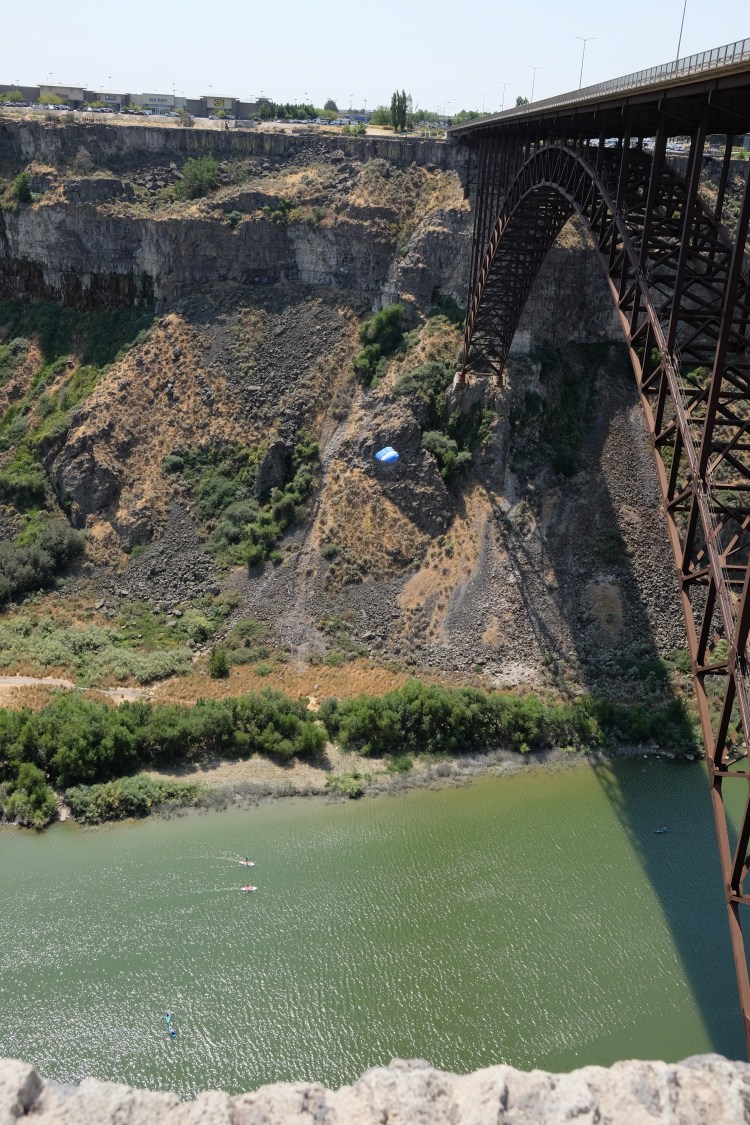
The blue speck is the parachute of a silly person that jumped off the bridge. Saw at least 4 people jump and land on the river bar below.

a082017_0203

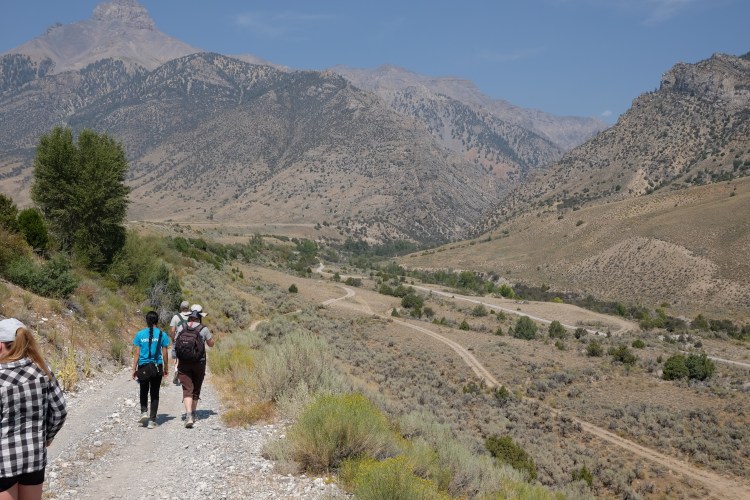
The hike into the the Cedar Creek wash.

a082017_0216

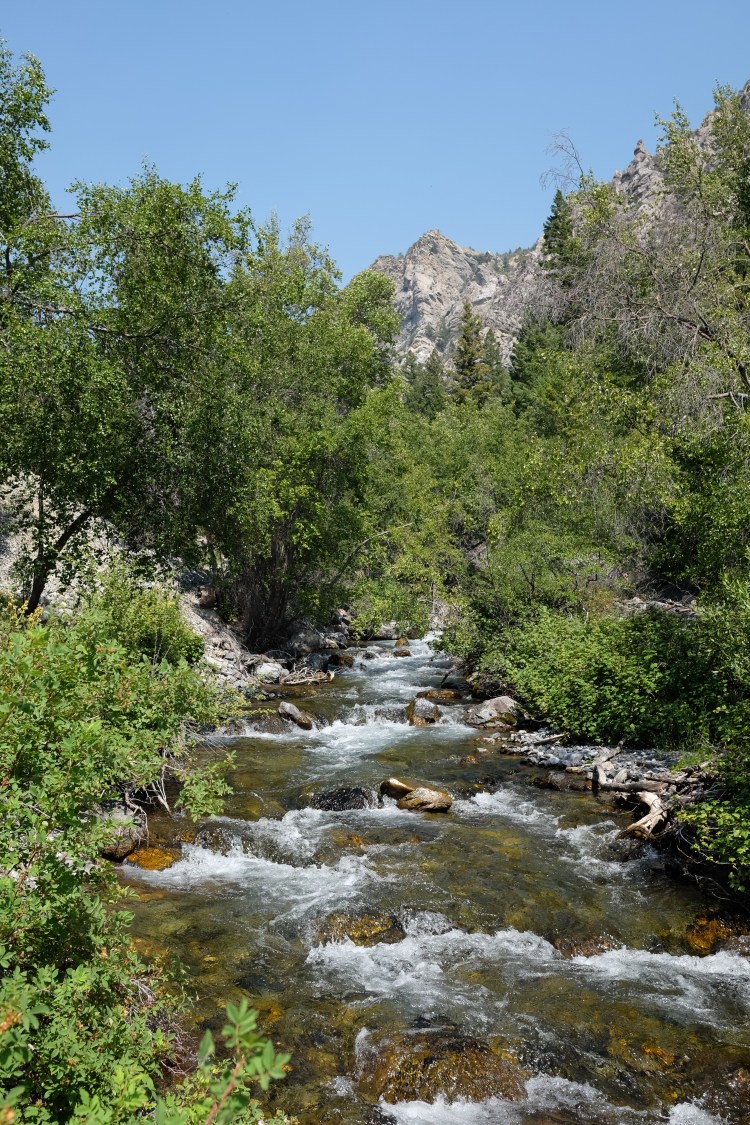
Cedar Creek

a082017_0221

The wooden flume rotted away from it’s wire banding. Looks like a slinky

a082117_0273

Off road, waiting for the Eclipse

a082117_0290

Darkness

a082117_0309

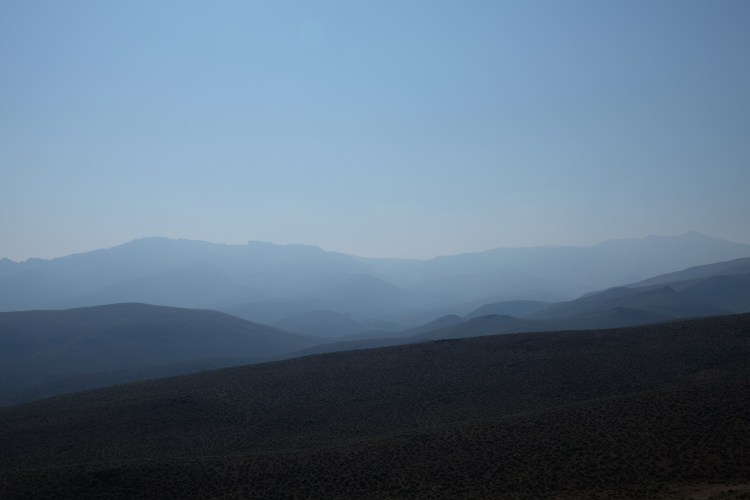
These mountains were invisible through the smoke until some weird effect of the eclipse made them show up as if there was a 360 sunset.

a082517_0424

We saw a total of 8 well antlered bucks wandering around Lakeview. I think they knew they were safe from hunters when in town.

Rock Paper Scissors

Air

There are days when the air feels like warm flannel, comforting against the skin. It strokes the fine hairs of your arms and face and it smells like summer, cut grass, gardenia, a faint touch of sweat. It loves you, seduces you, it takes you to sex, to sleep. Your teeth unclench and smiles come easily. Your arms reach out and you stand straighter.
But sometimes it is cold. The air feels alive and malevolent, picking at your clothing with sharp little fingers, chilling the spot where your jacket and pants don’t quite meet, or the bare wrists above the glove and below the sleeve. Your ankles. Your face. Sometimes air is bitter and its freezing fingers jam past your exposed places and rip at your heat, pummel your edges and work into your core where they clutch at your heart and lungs, gripping them tight and tighter until breathing itself hurts and there isn’t enough air to breathe.
Inside your body, air is life. Our last breath is an exhale. The death rattle is the completely relaxed throat allowing the last bit of air to escape the lungs.
Fire
Fire is the release of stored sunlight. The burning tree is sending light back into the sky. You cannot touch it, that stored sunlight. It is the energy inside us. Flame is when it is out of control. It wants to get back to the sun, it roars in its freedom. It runs the engine and destroys the building the engine runs in.

We were on Highway 50 in 1959. My grandmother pointed out some tree skeletons on a bare hillside and said, “Those must be left from the fire of ’29.” I didn’t really know what she was talking about. I was 7. I had questions about how could a fire be big enough to take dozens of tall pine trees and reduce them to blackened and silvered shafts. Their branches had fallen off and most of the blackened char had worn off so they were more silver than black. How could THAT be a tree? How could fire change something that big so profoundly that it was unrecognizable?

And then there is the patch of heat on the floor with a black cat in it. What could be further from the devastation of a forest fire? But the same energy applies. The sunlight, existing as a cat’s purr, is the same sunlight stored in a tree.
It’s control. That is the difference. Not human control. Just controlled release of the sun.
Earth
Sometimes I can feel the line that runs from the top of my head through my feet into the center of the earth. I imagine the layers of stone and the boiling lava and the heated core of our planet.
But no matter how much I try to convince myself of my place on Earth, I am not the center, I am a speck on an infinite and infinitesimal line between there and there. Now and the next now. Right now I am here but here is only a moment in time where I am glued by gravity to the surface of this planet. I haven’t been here because now is already over. We are in the next here and now the next.  Somehow this is earth, but it lacks permanence and solidity.
Water
 
You all know my relationship to water, or to rivers and wilderness. But think about water. Just water without complications, without its messy relationship to the container it happens to be in at the moment. How do we know water when it is independent of the container? Our planet is the container.
Rain, river, ocean, breath, blood, cloud, storm, aquarium, meat, leaf, cell, spit.

Compassion VS Empathy

I started thinking about the difference between empathy and compassion about a year ago. I had always thought of them as essentially the same, almost interchangeable.

Compassion has some emotional distance built into it, you feel compassion.

Empathy is more intimate in that you are sharing the feelings of another person. Someone is sad, so you cry, someone laughs and you laugh, too. Sometimes even when you don’t know the cause of the tears or laughter.

Compassion has always been troublesome for me because to protect myself from being incapacitated by other people’s feelings, I had to remove myself emotionally from them. I had to stop identifying with other people. I was not comfortable with this because I felt that I was losing my compassion for them at the same time. I didn’t know how to care about people without getting sucked into being them.

I was driving down a levee in the South Bay to a small bird refuge. The road was deserted, straight and narrow. It was set above the fields about 20 feet and was only as wide as the tracks of my car. The edge of the road sprouted a fringe of tall swaying grass that was almost white from the dust of the road. The rising sun hadn’t done much more than turn the world pale blue. The gravel of the road rumbled under my tires and my car tossed up a large plume of white dust behind me.

A small wild rabbit jumped out of the grass into the glare of my headlights then stopped right in front of me glaring back at me. Its eyes glowed blood red and were set on the sides of its head so that it was almost impossible to see both of them at the same time. I slammed on the brakes to avoid it.

From the left something blew in like a sheet of newspaper and when the headlights hit it I saw a huge white barn owl looking at me from its heart-shaped face. That moment of distraction was just enough to give the rabbit a chance, so it scurried away from the car while the owl flapped back into the eucalyptus tree where it had come from.

By this time my car had come to a stop and the white cloud of dust caught up with me and was following the rabbit down the middle of the road. Stupid rabbit was completely exposed should the owl try again.

When I was watching the little drama I was simultaneously scared for the little rabbit and frustrated along with the owl. But as the dust cleared I felt compassion for both of them. The hunter was going hungry and the prey had escaped death.

Maybe compassion is always tinged with sadness. Joining in with laughter always seems spontaneous, whereas I have to stop and think when it comes to tragedy, to sudden changes in fortunes. I don’t tend to think of laughter as being part of compassion, too.

When I decided not to carry my mother’s grief around in my skin – when I decided not to empathize with her, I also stopped being compassionate for her. I had to work really hard to get that back. Compassion for my mother could only come when I stopped identifying with her, empathy with her was dangerous because she was so depressed, she could have killed me, too.

Compassion let me feel my feelings about her. Sad, yes. But it was my sad, not hers.

Write For Your Life – a book for Beth upon her retirement

Write For Your Life Photo Album

Click on the link  ↑  (up there)  to view this slide show with pictures and text by the Write For Your Life group.

A window will ask if you want to save the file or to use powerpoint to view the file. Choose view with powerpoint. It should run even if you don’t have powerpoint on your computer. Saving it will work also but you’ll have to find it someplace and I don’t know where your computer likes to hide things.

Its a big file and takes a long time to download. 5 minutes at least. 75 pages.

If you have trouble viewing this slide show send me an email and we can work something out.

If the download works and the slideshow starts (keep your fingers crossed) you click your mouse to turn the pages. There is an almost invisible set of arrows at the bottom left corner that will allow you to go back if you missed something. When you are done hit your Esc key to close powerpoint.

Kit

Skunks

“Half Vapor; Half Shade”

Charlie and I lived in a house in the woods of Orinda for 18 months. One night while we were watching TV in the early evening we saw through the open French doors, a mother skunk lead a parade of her 4 or 5 babies across our back deck. The babies were exact replicas of their mother and very cute and the smell rose into the house like a thick fog. They were headed for the so-called compost heap up the side of the house between the house and the parking area.
One night we were awakened by a powerful stench that we were convinced was an electrical fire nearby. The smell was so strong it felt like smoke from burning plastic in our lungs. It was nothing like the whiff of skunk from road kills or even the blast from the mother skunk and her babies. We spent an hour trying to find the source of the “fire” before it thinned out enough to resemble the stench we recognized.
After living at that house for a while I learned to be cautious when I walked near the so-called compost heap because it was really a feeding trough for all the garbage eating critters of the neighborhood and more than once the odor of garbage was overwhelmed by the odor of skunk.
One day, as I walked up the path to the parking area I noticed that one of the large green plastic garbage cans was moving mysteriously. It was still upright so I crept up to it to see what was inside. It was a skunk. It was trapped and circling around in the bottom of the empty can trying to find a way out.
I wasn’t sure how to deal with the problem because our landlady, who lived on the premises, had strong, if irrelevant, opinions about many things. I wasn’t sure if she was going to kill it, set it free or make it a pet. Those were all possibilities.
I had to go to work and didn’t want to get collared into one of her projects so I left the skunk and the landlady to make their own minds up.
I got home from work about 6 hours later and as I tromped down the path past the garbage area I noticed that the green can was still wobbling around. I took a careful peek over the rim of the can and saw a very uncomfortable skunk looking up at me. It was a hot day and the can had been in the sun for hours. The skunk looked dehydrated and very unhappy. I felt guilty for leaving it there all day but justified my inaction by saying to myself that I expected the landlady to find it and deal with it before it died in its trap.
So I bet you are waiting for the punch line. You bring up skunks and you introduce suspense. Its like a cheap high; you can have people waiting for the disaster, almost holding their breath waiting for the horrible blast.
Ha!
I carefully and slowly tipped the can away from myself, expecting the skunk to bolt from the can, joyous in the cool fresh air. Freedom, it would shout as it ran away. Worst case was that it would spray the can or me, as it left.
Nothing happened.
You’re waiting for it, right?
Nothing continued to happen. I slowly crept around the can to peek inside. I looked around the edge of the can. I got closer. I wondered if the skunk was sick and didn’t know that it was free. Maybe it had rabies.
Finally I could see it. Its little nose was dry and cracked. Its eyes were glazed, its black and white fur had a dull haze of garbage all over it and its little pink tongue was rasping away at the bonanza of newly reachable, fetid garbage that coated the interior of the can.
Ick.
I left it in the can and walked the rest of the way down the hill to my home.
Ain’t nature grand?
I really love to write.

Souris

There is a man sitting in profile at a small rough table in a small tough cabin. The window behind him is deep blue with black tree shadows in the mid-distance. Inside, the cabin is filled with warm light, orange pine paneling, old oak furniture, a well-filled, but small bookcase. The man has a lot of hair. His head is covered with longish curls, a little shot with gray. His beard is long but neatly trimmed. His lips show unnaturally red and wet and soft surrounded by the coarse black hair.

His eyes are blue and ½ closed. He is tired form a long day but he can’t remember in any detail what he did since the sun woke him at dawn. His body is stiff from sitting and he looks out the window and notices for the first time that they day is over, now he has to get through the evening.

Hunger suddenly pulls on his leash and he pushes away from the table and stands a little unsteadily and blinks at the piles of yellow paper, covered in pencil scratchings, (“writing” he sometimes called it, when things were going well, “hieroglyphics,” when he was overwhelmed with words that came so fast he couldn’t read the scribbles later, “pencil scratchings,” when he was anxious and depressed). The yellow papers cover the side of the table where a friend might have sat, if he was expecting someone for dinner. He picks up the tablet and reads the last few sentences and with a disgusted snort he throws the tablet onto the pile of papers to keep them in place. He wishes he could remember to number the pages so he didn’t have to struggle to keep them in order. He pushes at the top layer of paper slightly, then he forgets this thought and walks into the part of the room with the stove and refrigerator. He opens the old refrigerator and pulls out a ½ pound of thick sliced bacon from the meat drawer. He peels 4 greasy strips off the slab, lines them up and cuts them in ½ so they will fit in the frying pan. He scrapes the bulk of the mornings drippings into an old red coffee can set on the back of the stove, puts the heavy cast iron frying pan on the burner and lights the flame with a white tipped match that he struck on a piece of sand paper taped to the cabinet door next to the stove. The heat turns the cloudy residue of fat left in the pan into a clear oil filled with small flecks of bacon glaze. He pours this into the red coffee can and arranges three slices of bacon in the frying pan. As they shrink while they cook he puts the rest of the bacon in the pan. The cooked bacon goes on a paper towel to drain. He gets two eggs out of the refrigerator and cracks them into the bacon fat. He had the exact same meal for breakfast.

Somehow lunch had passed him without stopping the flow of pencil onto paper.

As he mops up the runny egg yolk with the last bit of bacon he hears a thumping and scratching in the wall behind the stove. His stomach churns at the sound. He knows he has to do something about the noises but he hates killing things.

Souris.

Misery.

Mice.

Somewhere he had heard that the word souris was French for mouse and was also used to denote misery caused by many small but intractable irritants. He consults several dictionaries but cannot confirm this usage.

With the obsessive neatness of a sailor he washes his plate and fork, dries them and puts them away in the cabinet. He drapes the dishtowel over the faucet to dry. He leaves the bacon fat in the pan to cool overnight. Someone had told him that bears were particularly fond of bacon fat so he keeps it in the red can in the cabin instead of taking it out to the trash with the other garbage. He’s never seen a bear near the cabin, no tracks or damage that might even suggest bears, so he feels like an idiot taking precautions. He mutters to himself that he is a silly old woman fussing about bacon fat. Then he corrects himself; a silly old man making sure he wasn’t attacked by bears.

The evening stretches ahead. He doesn’t want to go to bed yet, it’s too early and if he falls asleep he will wake up before sunrise and lay thrashing around until light. But he also doesn’t want to start a fire because there will be the trouble of going outside to collect some wood and kindling, then kneeling on the cold bricks in front of the hearth, and assembling the wood, put the match to it; nurse the flame and then sit with the fire until it could be put to bed.

He thought about taking a walk but the path to the lake was too dark, there was no moon, he would stumble on a root or lose his way. The white dust of the road solved that problem but he still sat at the table.

He knew his apathy was a comedown from the intense writing he had done during the day. He stretched and bent back and forth, cracking his back, dropping his shoulders down, lifting his arms over his head then swinging them back pulling at the muscles in his chest. Trying to reverse the hunched over, pulled together, posture he spent the day in while he filled the yellow paper with pencil marks.

He thought about burning the yellow papers on the table. Pile them up in the fireplace and set a match to the whole mess without reading any of it. It wasn’t a strong temptation, just a little thought in the back of his mind, easily ignored.

Unlike the mice in the walls.

Were the little creatures messengers of his unconscious? Is that why he didn’t kill them? He had invested them with power over the space between the walls, he had surrendered a closet to them, hoping they would take the space and stop bothering him. He knew better of course. Given a warm spot and enough food they would reproduce until there was no food left and their warm spot was fermenting with feces and urine.

Anything but that. It would be easier to read the text on those yellow pages than deal with the mice. That was a cop-out. He was ashamed of himself that he thought he had to bully himself into reading his work, but he also knew that if he read it while it was still new he would hate it. It wouldn’t match up with his imaginings. Sometimes writing was like trying to catch a half remembered dream, events might carry weight, a huge feeling of significance, but when read are simply a pair of boots sitting under a table, a wine glass with a dried pool of red wine glazing the dimple where the stem joins the bowl. Significant things but without the context of a dream they are the ordinary stuff of life, no big deal.

He was practiced enough to avoid reading right then, he would read a book. The dictionary was still lying on the table so he picked it up and started reading at random.

Souris. He had picked up the French dictionary. Mice. That made him hear once more the scratching in the wall and smell the faint ammonia of their nest. What was he avoiding?

On the Eel River at Basin Creek

One year we camped on the sand dune on the opposite shore from Basin Creek. A large tumble of rocks juts into the river and behind it the water slows and the particles of sand and silt that it carries at high water fall out and form a perfectly flat dune, visible when the river recedes. The dune across from Basin Creek is about half the size of a football field. Its been there for many years, either renewed every year it floods or resisting the wind that blows the sand up stream. Sometimes it is bare of life, other times there are small willows taking root in the sand.

This is a big trip, 25 people and at least 10 tents and twelve or thirteen canoes. We hit the beach early enough to eat lunch and take off the rest of the day to hike, swim, sleep and chat. We spread across the dune and set up our tents a polite distance from each other. The south side of the canyon cups the dune with a wall of grape vines and blackberry making me think of Sleeping Beauty’s sleeping castle. I am not interested in tackling the thorny hedge to climb off the dune to visit the abandoned railroad tracks that follow the river for 60 miles through the wilderness. I am also not attracted to the hillsides covered with poison oak.

It had been a long day kneeling in our canoe and I wanted to stretch my legs, so I scrambled through the pile of rocks that formed the dune and started walking upstream on a long gravel bar stepped by the rise and fall of floods. Some of the ledges were fifteen feet above the next lower level, telling a story of a long period of flooding in the last ten years or so.

A branch had gotten tangled in some rocks and submerged except for a branch that stuck up into the air six inches, creating a bubble of air as the water rushed past it. The bubble would make a funny gurgle as the river played with the stick making it bow and flip in the current. It sounded like river laughter, wet and gurgly Ha! Hahaha Ha! Hahahhah Ha! I laughed, too. Laughter can be reflexive like yawns.

On another warm winter day on the American River I sat for four hours while the paddlers came to me at the take-out. I was resting my shoulder from an injury and brought a book to entertain myself while I waited. It was unusually hot for February and I couldn’t sleep although I was drowsy, so I put my camp chair in the river and sat there with the river up to mid-calf and watched the river.
I felt the mass of the water as it sped by, a huge long moving thing, miles long and yards thick and deep and filled with life. I was a speck compared to the bulk of the water before me. Sometimes it seems a miracle to me that the whole solid earth hasn’t been flattened by water. How could my little feet penetrate something so real?
The winter sun couldn’t pull away from the horizon so the river surface shimmered in silver. The flow was high enough that the cobbles didn’t make any noise so all I could hear was a noise like static on a radio telescope aimed at a distant galaxy. It was the sound of a billion grains of sand slamming into a million pebbles tumbling over the river bottom, dragged by the current.
The band of silver before me rose over the cobble bar, the water pushed up by the water behind it. In the distant channel it raced downstream in bands, the deep places fast and dull silver and in places near the shore it slowed and shone brightly and sometimes the water was so still it shone like a mirror spinning slowly on a turntable.
I was hypnotized for hours, unaware of my body except when a fly buzzed me or something brushed against my feet in the water. I had prepared myself to be bored for hours while I waited for the boats but ended up startled to see their dark silhouettes arrive at the thin bead of light where the river rose out of the earth and then drift slowly down the silver path to meet me on the shore.

Lightening. Thunder.

       I lay in my tent in the dark. As the sun set, a bank of clouds had drifted overhead, so there was no moonlight. The campground had settled in for the night, thank god there weren’t any late night campfires with that infernal ring of yakkers getting increasingly drunk and loud as hours of sleeplessness clock by. It helps to be a large group with a shared daylight activity. During the day we drove upstream to paddle different sections of the Flathead River in Montana. In the late afternoon we returned to the small campground next to the river and after dinner we were tired and ready for bed an hour or so after sunset.

         We had 4 little girls, around 10 years old. They had formed a troop and had set up their tent on the edge of the campground, away from their mothers. A 5th girl, about 14 was in a separate tent, also away from the adults.

         Things got very quiet. No mysterious rustlings in the grass, no sad breeze sighing in the pine trees, no hard thumps of things falling to the ground. The silence felt solid, like cotton in my ears. I thrashed around as quietly as I could, I didn’t want to wake up Charlie by bumping into him but the tent was a tight fit and the sparks of static electricity I threw off as I moved sounded like distant gunfire. Eventually, even I settled down.

         Don, our trip leader, in his tent nearby, fell into a deep sleep and sent out a deep contented snore. I like to hear him snore. I know that snore from many years of hearing it on many different rivers and it is as familiar and comforting to me as the sound of my husband’s breathing next to me. It means all the hustle and bustle of keeping twenty people organized is done for the day. I feel like his relaxation is so deep that there is some spare left over for me. I sighed and stopped listening for the mysterious sounds of the night.

         I lay on my back and closed my eyes and started breathing in time to Don’s snoring. A bright flash of light penetrated my eyelids. Oh, no, a car, a late arrival, be good and pick a spot away from us so we don’t have to hear you stumbling around in the dark, setting up your tent.

         There was no sound of an engine. Curious, I sat up, unzipped my door, but I couldn’t see any swinging headlights. Maybe they already had a site and they just went to bed. I lay back down and closed my eyes. I listened to Don snore.

         Another flash and a long time afterwards a bass rumble. I sat up. A storm? I waited, got bored with it, started to lay down again, fidgeted with my sleeping bag and night cap instead. Suspense was overwhelming my desire to sleep. Another flash, yes, lightening. I started counting to see how far away it was. 21,22,23,24,25…Is it miles I am counting? How fast does sound travel? Rumble. Finally.

         More lightening, counting, thunder. Each flash was followed closer and closer by the deep rumble of the thunder.

         Charlie woke up, “What’s happening?”

         “Sounds like a storm is coming.”

         The girls. Are they going to be frightened, will they think of closing their rainfly? I put on my jacket and climb out of my sleeping bag, put on my shoes without socks, I can’t find them mixed in with all my clothes at the foot of the bag. Damn, all this stuff! It tires me out, just keeping track of everything.

         I find my flashlight and crawl out of the tent and stand on the soft duff of the forest floor. The campground has turned into Fairyland, dark with lights floating everywhere. All the tents are lit like Japanese lanterns; a blue dome with a golden strip, a glowing green one and a warm orange one. People search for their rainflys, shove gear under picnic tables and fling tarps over the kitchen gear. A chorus of zippers opening and closing. The footsteps of the other campers is muffled by the red duff filling the paths. I join the dancing lights with my flashlight, I seem to be the only person who knows where the girls put their tent and even I am not sure I can find them in the dark. I move in their general direction, cautious about branches snapping in my face. The flashes of light and the rumbles are rushing to meet each other. I count to 10, then 7, then 5 as I run.

         I find them, tumbled in a pile like puppies, sound asleep, smelling like apples. “Hey, wake up, there’s a storm coming. You need to get your stuff out of the rain.”

         Tallulah’s head barely rises above the tangle of nylon sleeping bags, “Whaaa?”

         “There’s a storm coming.”

         “Oh.” Deep, exhausted sleep has drowned them, I am not going to be able to pull them up. They are on their own. I zip up the screen and the rain fly, circle the tent collecting loose gear. Their PFD’s and paddles and drybags are outside but rain won’t effect them one way or the other, they are already wet from the day’s paddling.

         1,2,3,4,5 a rumble that lasts 30 seconds and rattled my ribcage sets me running back to my tent. I am chased by a rush of small hail. The trees are whipping the sky up in the darkness and small branches and leaves fall with the hail. By the time I get to the tent, rain has taken over and big fat drops whack the back of my head and shoulders. 1,2,3, crash. I unzip and fling myself into the tent without taking off my wet things. 1,2,3 crash, rumble, crash.

         1,2 crash.

         Charlie reaches for me, “Lie down, lets cuddle.”

         I can’t. I am too excited. 1,crash. 1, rumblecrash. Then there is no time to count. The flashes of lightening are the sound and the sound is the flash. The storm is hitting the high ridge on the other side of the river. The flashes of lightening are going off like cannon and I imagine huge boulders being chopped off the cliff face and falling into the river. I hug my knees. I can barely stay in place. I am dancing inside. I want to howl like a wolf. Wind and rain beat the walls of the tent. I think momentarily about falling trees and stop that thought, I can’t change that, there is no place to get away from or to. Listen to the storm, feel the storm, feel the lightening through my eyelids when I blink.

         Then the lightening separates itself from the thunder. 1,2. Then 1,2,3,4,5. The rain softens. Then 1,2,3,4,5,6,7,8,9,10. The rain is replaced by the pocking of large drops falling on the taut fabric of the tent, then patty patty patty patty pat pat. 1,2,3,4,5,6,7,8,9,10…20…30. I get bored with the counting but there is nothing else to do in the dark. The lightening is far away, now, dim and barely visible. The thunder that reaches us is long and deep, subsonic, disassociated from the sky and the lightening, more coming from the ground, trolls digging for gold or Chinese workers blasting a train tunnel.

         I can hear the river for the first time – it must have risen a bit from the rain and is racing across the cobbles on the beach.

         Don, like the last note of a symphony, starts to snore.