I was on a bridge over a small creek in Pleasant Hill almost underneath Highway 680 at Chilpancingo Blvd. The light ahead was red and I caught, out of the corner of my eye, a swirling movement in the creek. I looked more carefully but the light changed and I started to go but thought, “Anything that large in a ditch in this neighborhood has got to be interesting.” So I pulled into a gas station, dragged my camera out of my purse and this is what I saw;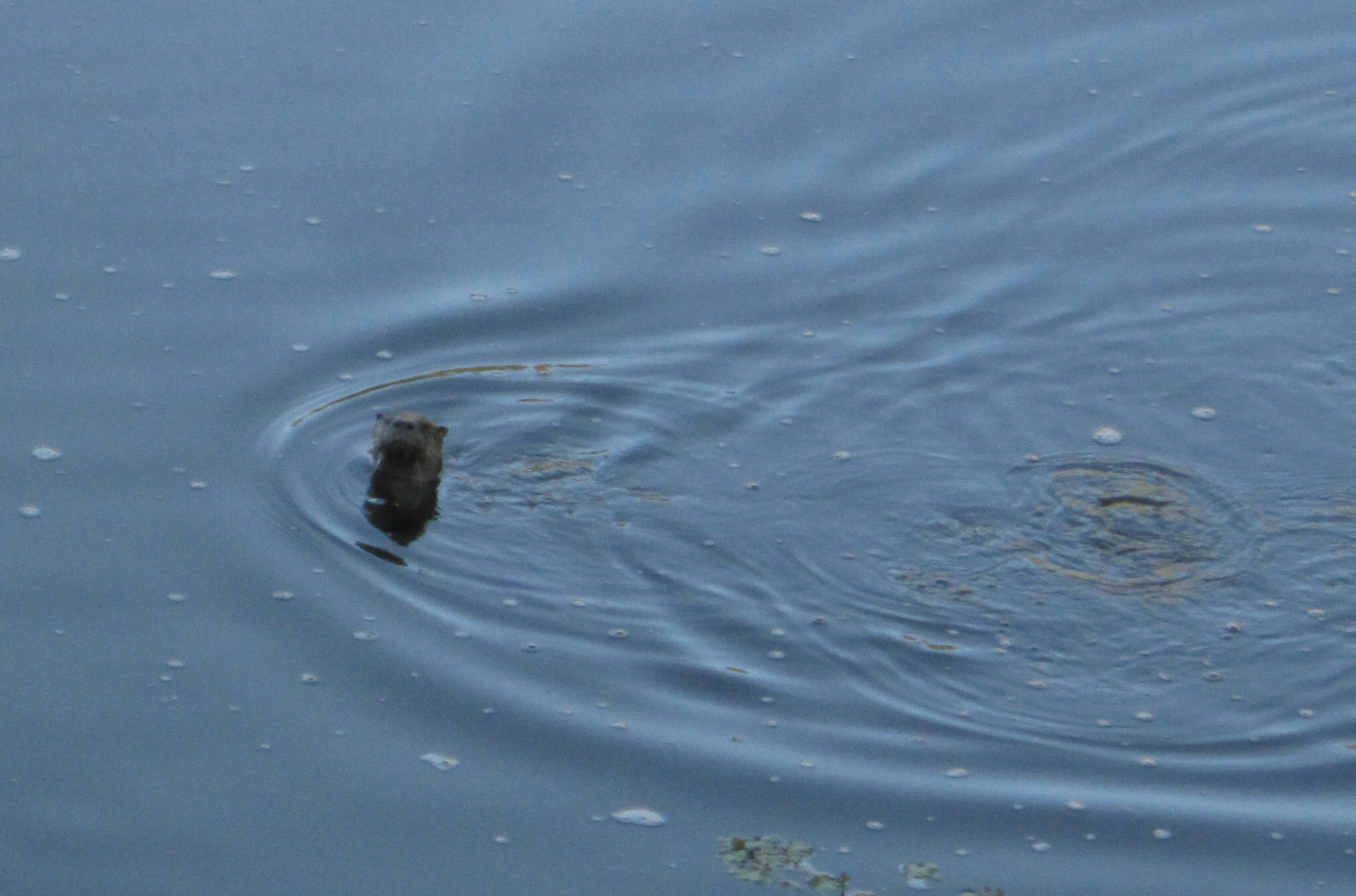
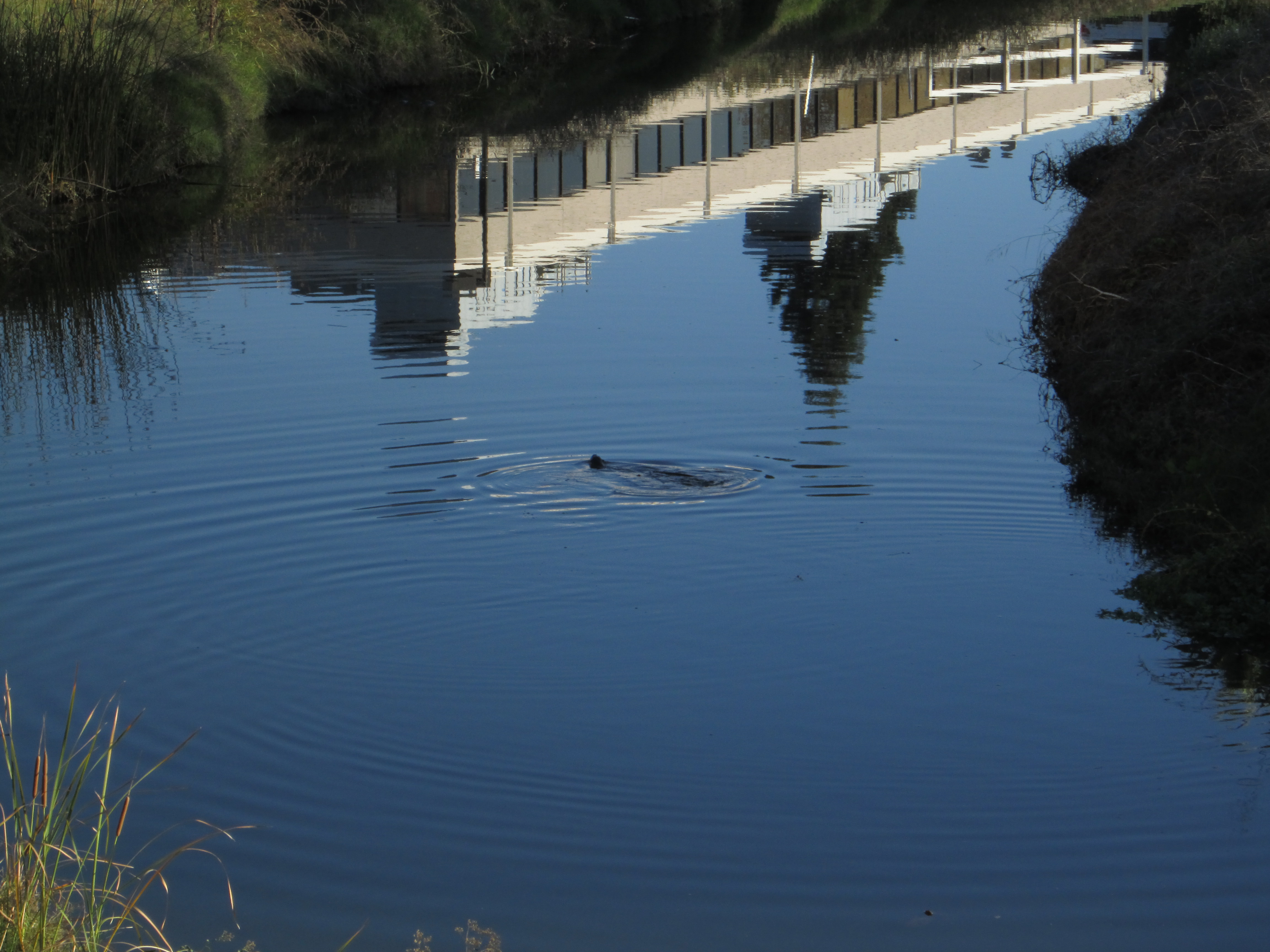

August 2013, Olympic National Park

Gull views the mountains
This is a link to a PowerPoint slide show of my trip to Washington in August. It is 57 pages of text and photos. When you click on it you will be given the choice of viewing or saving. Since the file is large and it takes a minute or three to download, I suggest “saving” it and then viewing it, rather than viewing it directly (which failed on my computer). You might have to track it down in your “downloads” folder if it doesn’t automatically pop up on your screen. Feedback is welcome as is info about technical problems you might have. –Kit
Art Project – please do not remove
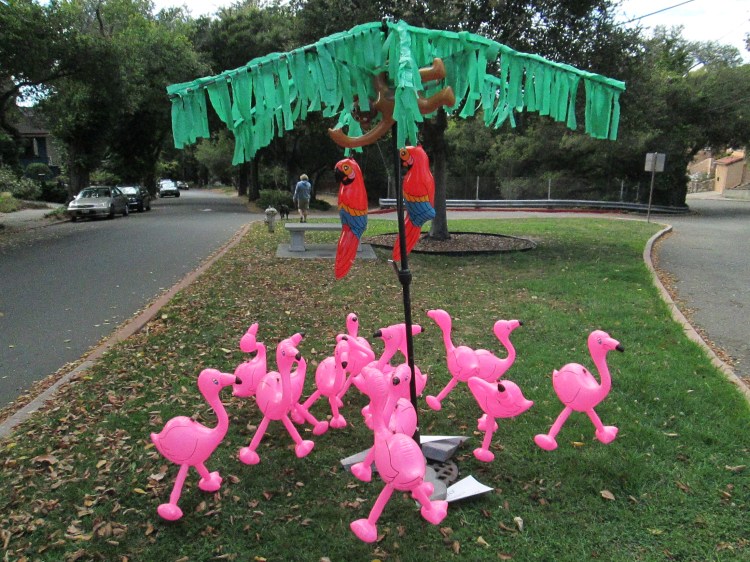
This is one of the things I love about Berkeley. This was originally placed within the fountain area of the Marin Circle. By the time I got there with my camera it had been moved to a quiet spot on a side street.
On A Poem By Pablo Neruda
6-17-13
There’s No Forgetting
by Pablo Neruda
http://words-end-here.livejournal.com/28329.html
My therapist told me that you don’t get rid of your adaptive behavior; it served a survival function and still does. Becoming whole and healed is a process where you spend your time in your real self more and more and in your adaptions less and less.
Adaptive was sort of a technical term in the context and I am not going to define it for the moment because I want to apply the idea to memory.
It’s pretty safe to say that I had a stressful childhood and until a few years ago I carried memories like a huge basket on top of my head and mind. The load was solid and hard and gave me headaches. I was pretty miserable and angry.
At some point, the balance tipped and I found that if I did the things that made me strong and aware and more real in the world I had less time to be miserable. Yes, picture a seesaw. Most of my life seemed to be stalled, with me sitting on the ground, my knees scrunched up, my hands gripping the iron handle attached to a wooden plank. The contraption balanced on a steel pipe buried in the ground. All of the metal parts are rusted but smooth from use. I sat there waiting and sad and alone, wishing there was some way I could get off the seesaw. Wishing was part of the problem, too. The part of me that was strong and intelligent sat on the other end of the seesaw weightless, ineffectual, invisible.
There were many things that contributed to change the balance of power. I couldn’t seem to jump off the seesaw, and when I caught glimpses of myself from the bottom, I didn’t really pay much attention to that self that was suspended above the earth.
I have used memory to make the shift. I haven’t forgotten my childhood miseries, but I have trained myself to remember the gifts of my childhood; the woods in Maine, the hidden Beaverdam, ice skating, making Christmas ornaments with my mother, the smell of turpentine when she was painting, the cold kerosene smell of my father when he came home from Alert at 3 AM and took Tom and me into the snowy backyard to look at the aurora borealis.
And I have to admit that despite the despair of my parent’s marriage, they both loved me.
It’s that kind of understanding that adds weight to my real self and tips the seesaw in favor of my strengths. The weak and helpless self is still there – it is just as much who I am as my hair and teeth and I can’t get rid of it anymore than I can get rid of an arm or leg but I don’t have to live there all the time. I can spend more time being happy so I have less time left over to feel bad.
Lake Shastina, February 2013
 The Mountain
My eyes are numb with sleep.
I struggle to understand the cold fog
of conversation coming from the distant kitchen;
something about coffee and eggs.
From the 20 foot high window, Mt. Shasta grabs me;
The mountain is golden, pink,
then lavender and cobalt,
then gray and black.
Everything is multiplied
in the black gloss of the lake below,
smudged by dull streaks of ice.
Snow crystals stripped off the top of the mountain
by silent, distant wind
catch the silver of sunrise,
form and faint at the mountain top
hoops of light and snow flying,
lace
or feathers,
a halo.
You know it’s cold up there,
the stubborn wind blasting the
snow skyward,
chaffing the mountain bare.
Sit in the warmth,
drink the coffee,
leave the ice in the camera for later.
Wild Geese
The wild geese on the island
walk up a rocky
slide into the black trees-
like old ladies clutching shopping bags
climbing the steep stairs of a bus,
complaining a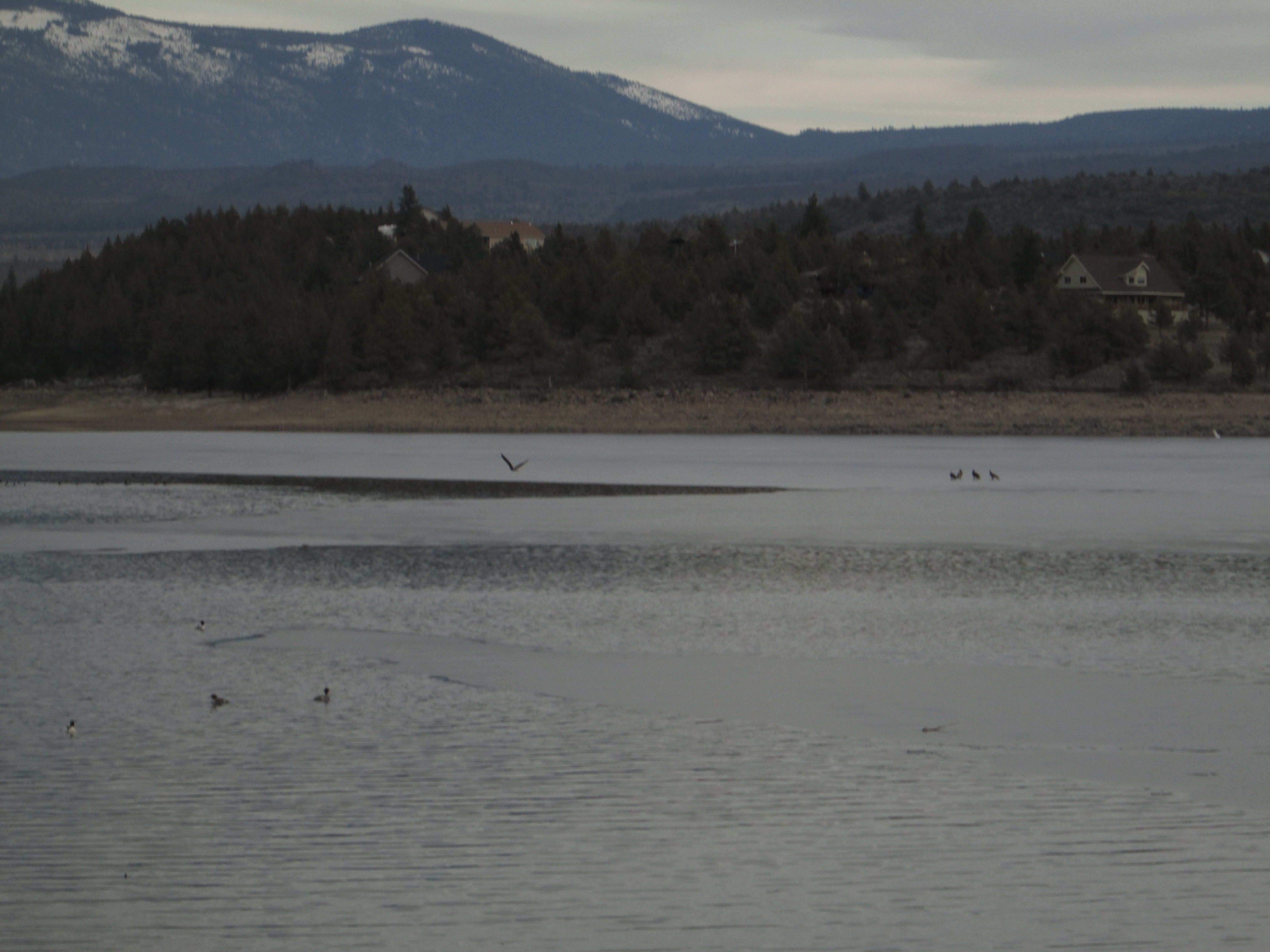 bout bum knees.
Nine Bald Eagles
Seven of them were spattered brown youths
hunched on a patch of lake ice
like old men bundled in rag-wool coats,
and two were perfect, gold-coin adults,
white helmets, bright yellow feet, floor to ceiling wings.
They glide, stall, swoop, pump,
beat the cold, still air-
kites without enough wind
wings flapping like sheets of newspaper
claws skittering across the ice.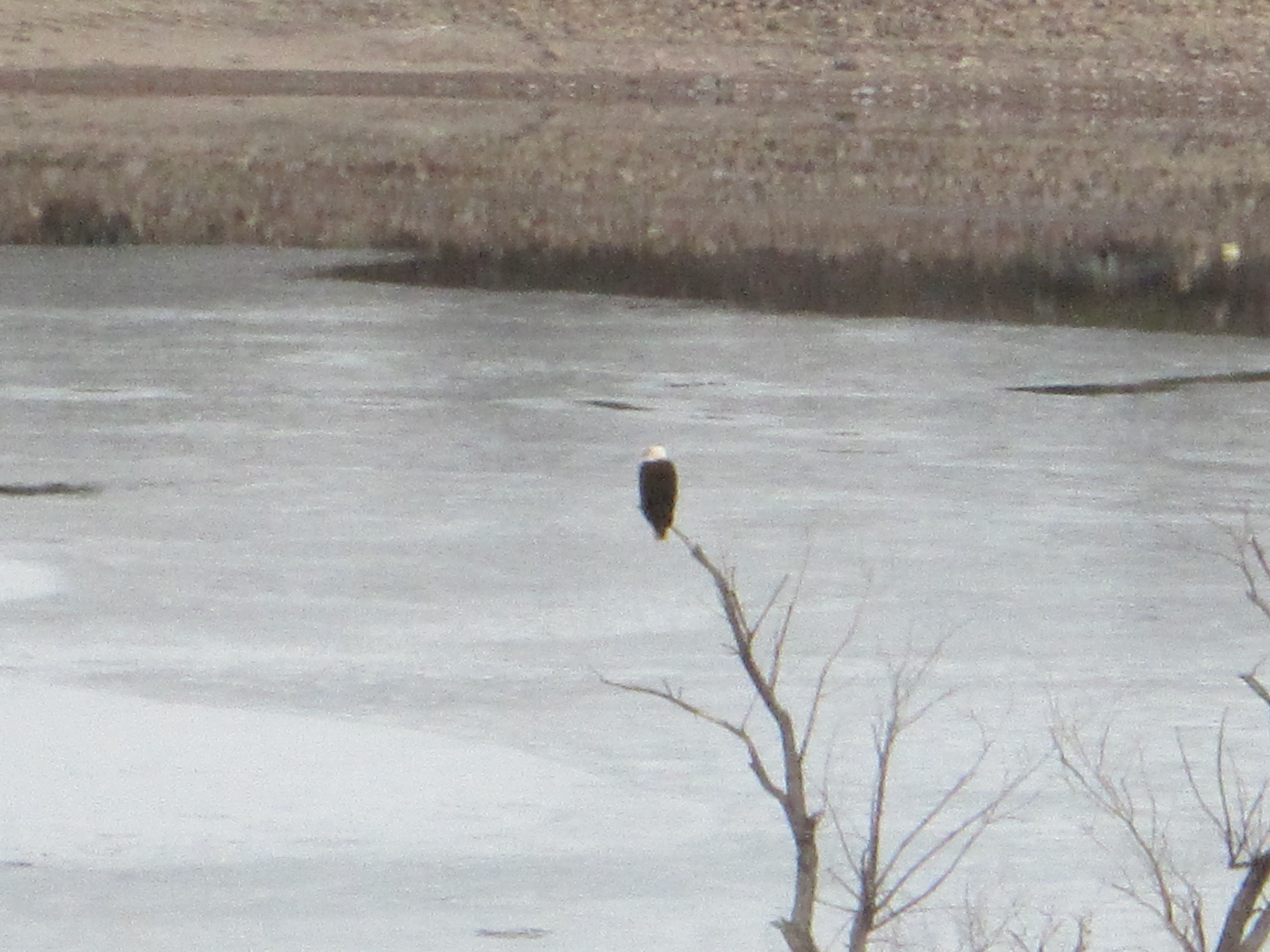
Canvasback ducks, thousands of them,
swim and chatter on the lake,
flashes of black and white as
they dip and flutter on the surface.
Their voices blending into uproar instead of birdsong,
a cloud of flickering emotions and games –
the chaos of a crowded school yard.
The eagles cruise the line of ducks
their down-beat ruffling the water.
The ducks keep feeding,
flicking water at each other, drifting out of the way,
nudging against the edges of the ice.
They spread away from the eagles
as if parted by a puff of wind.
Then, sudden screaming,
the ducks run across the water with a single mind
and collect at the edge of the ice,
climbing each other’s backs
flapping madly.
This is life or death, but why?
An otter materializes in the harsh black water
for just a moment
then submerges.
Anise Swallowtails 2012
I have had a bumper crop of Swallowtail butterfly chrysali. We started growing and hatching them in 1995 and have gotten pretty good at it. Every year we get 5-6 butterflys. This year we had to stop at 11 because the aquarium was getting full and we were running out of anise, which is their preferred food plant. But then, by accident, I found out that they really like parsley which is much easier to keep alive in the aquarium.
Here is a series of photos showing their life-cycle. Click on the first image to get a slide show – the captions are a little hard to read (who thought grey on black was easy to read?) but they fill in some of the details of what you will see.:
-
- The overall setup. The plants are set in jars of water to keep them fresh for the caterpillars. There is a stick for them to form their chrysalis’ on. This year for some reason they preferred using the glass or picked stems of anise that wilted under their weight so I used a clothes pin to tack them onto the stick.
-

- They start out looking like bird droppings
-

- As they outgrow their skins, they molt several times keeping this bird dropping coat until they get to be about 1 1/2 inches long
-
- Bird dropping 2
-

- I found a few on a parsley plant in the yard and soon the aquarium was full. These ones have molted to their lovely green, black and yellow spotted hides.
-

- This guy was about 2 1/2 inches long when she went “wandering.” When its time to set the chrysalis they stop eating and frantically wander all over the tank until they find a spot they like. All the time they are leaving a trail of silk on the glass.
-

- Looking at her underside through the glass
-
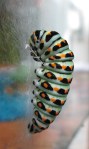
- Hitched up to the glass with the harness around her shoulders. Its hard not to anthropomorphize. I know they have 17 shoulders if they have any.
-

- A day or so later they shed the glossy green skin so they look like leaves folded on the underside of a twig. The black blob at the bottom of the shot is the discarded skin.
-

- This girl broke out and stretched her wings while hanging upside down from the ceiling of the aquarium.
-

- Released into the back yard on the parsley plant.
A Glass, A Pitcher, and Two Apples
From a prompt of
A Master of My Craft
by Czeslaw Milosz
8-27-12
A Glass, A Pitcher, And Two Apples
The glass is a lens. So is the pitcher. The water is cool but there is no condensation, maybe a few drops under its lip, left after filling the glass. Smaller lenses in an uneven line down the side of the glass. Lens upon lens. The two apples are green and hard and very shiny. Reflections of light; tiny signal mirrors on the top left of each bright green sphere.
But you only see the apples through the many lenses. The pitcher stretches the green light, deforms it, expands the green. You can’t even tell its an apple – just greenness in the pitcher, a speck or two magnified.
The glass has a pale pink lipstick stain on the rim; the only dull thing on the mahogany table. The table is freshly oiled. It shines and you can see bits of lint curling, trapped in the oil. The leaves, a large dark oblong hanging down, the top, a narrow flat surface upon which sits a glass, a pitcher, and two apples.
Is death ever on time? Some people keep making appointments with death but keep on standing him up, leaving him sitting at the bar of the hotel, drunk on cheap wine. He always shows up in his sleazy black suit with a tangled string tie. His hair is neither long nor short. His eyes are kind and his pale lips promising. He is relentless because he has all the time in the world. If you don’t show up this time, he’ll meet you the next time, or the time after that. You can rely on him.
So put on that red dress you wore before you knew better, and meet him at the Palace Hotel and take a few turns on the dance floor. He actually smells nice. This is a surprise; you expected a garbagy smell but he smells like rich compost. It goes with the black suit but not the little tie which, if you dance close enough, you will notice smells like the Brylcream that makes his hair shine and sit like dark skullcap on his head..
His hands are thin and bloodless but still warm.
Dancing with him is a dream. He leads by drawing you along. He sets the rhythm and the time, but there is no music, no other dancers, no crystal chandeliers, or tables or chairs. The piano is covered in a white cloth, the long point of a corner hanging off that sexy curve where the torch singer leans, looking lonely; she has lost her love and she sings about a glass, a pitcher and two apples.
Memorial Day On The Eel 2012 (2 trip reports on the same trip)
By Kit Hewitt
Trip planning
This is my trip, the one that, starting in January, fills as soon as the schedule goes out. It’s hard to say “no” to anyone who asks to join, so I always end up with a larger crowd than I like. But then I never regret having all these good people on the river with me. It all works out for the best. In fact every year I come off the river saying to myself and anyone else who will listen, “That was the best Eel Trip ever!”
It’s true, too. Every time.
It is hard to write about the best trip ever. There are the harsh realities of getting the group together at a new put-in. Our shuttle driver, Rick Doty told me that the regular put in, upstream of the Alderpoint Bridge was washed out and he suggested we use the one in town. “Ask anyone in town where the Nude Beach is.” He said. I used Google Earth to view the satellite image of Alderoint and saw the road as it wound through the trees to the RXR tracks. Rick said the road from the RXR tracks down to the beach was not good for cars and the walk was longer but not at all steep. Due to indecisiveness on my part about giving orders (I always want to ask someone what they think) and my semi-late arrival, people had scattered like thistle-down and needed to be swept back together in a pile so I could give orders.
This trip has gotten pretty routine for this organizer after more than 10 years of running it. POST trippers pretty much know what to do. This is also a little problem because they might follow the old routines even when they are not applicable in a new context. So I was worried for a couple of weeks about the new put in and making sure everyone got there. Was it really better than the old one? Was the road “doable” and and and and….
So much for stressing out.
Then there were the unusual things. Bill and Vince arrived the earliest and they sent Shauna and Mary downstream in a canoe to pick the campsite at the big rock across from the tunnel. We always call this the Big Rock campsite but there is actually a formally named place on the Eel called Big Rock so I don’t use the capitals and mention the tunnel so people will know that I am talking about the beach 3 miles downstream from Alderpoint.
At the Nude Beach we circle up and I announce that the boats had to be loaded and ready to go downstream when the shuttle drivers got back and that Charlie would be taking a group down as soon as they could get ready. The shuttle driver’s partners would be ready to go when we got back. So we were split into three groups right at the beginning. First Mary and Shauna, second, the non-shuttle pairs and third, the shuttle pairs.
The shuttle was topmost in my mind so I completely forgot about doing a safety talk. Bad Kit.
The shuttle was uneventful except that Don stopped on the freeway to check the trailer to see what was rattling around. He didn’t find anything so we proceeded to McCann and parked the cars. I took a quick trip to the bushes and was the last to get into the van. As I swung up I noticed that the roof rack was falling off; a broken bolt. This involved much conversation and speculation while it was removed from the roof gutters and shoved into the van. We stopped for gas in Garberville and while we waited for someone to pick up their burrito, someone else noticed that the van’s right rear tire was flat.
This is something I love about POST; before the burrito was eaten, Bill B. had already been under the van starting the jack and was watching Pat loosening the lugnuts. Don was unbolting the spare and in less than 10 minutes the tire was replaced and we were on our way. Zip zap – thank you boys. I would say that during the shuttle we lost less than 15 minutes to these oddball events.
Back at the Nude Beach our boats were ready and we started downstream. The next big anxiety I have about this trip is the wind. And of course that is what we met coming at us as we headed downstream at 3PM. I forced the pace to get us to camp so we didn’t stop at the steel bridge over Steelhead Creek, we only drifted for a few minutes here and there to catch our breaths. In less than an hour we were in camp and hauling stuff up the steep bank to where the kitchen was going to be set up. It was not exactly at the Big Rock campsite, there were some other campers (two nude young ladies lying face down in the sand) in our usual spot. We were parked downstream of the Big Rock on the dune. An incidental benefit of this site was that we had more shelter from the wind that tried to blow us back to Alderpoint when we came around the corner into camp. That last 100 yards is always such a bear! But it does lend credence to my wind worries and give folks a chance to re-think any fantasies they might have about sleeping in on Sunday morning.
I staggered around answering questions and probably looking like a dying cow. Everyone had been up since before dawn (4:30?am), and had been running around ever since. Well, I did sleep in the car on the way up, but I didn’t feel rested. But there I was, on the beach of my favorite river watching my favorite people gather together.
I can see why certain nomadic cultures never give up their wandering life. There is a bond formed between people when goals and methods are shared simply and over the years POST has developed a close culture of making sure everything that needs to be done, gets done. I would so love to share a desert island with this group.
Bill B. found a tidy bundle of sticks, bound together with a piece of red twine. He recognized it as a fire starting tool, a bow version. He and Jeff started playing with it, and were able to get one piece of wood to smoke but they had trouble with it and finally gave up after the spinner stick broke. If we were in trouble and needed it to work, no doubt of it, they would have gotten a flame out of that sucker, but being comfortable and with a pack of dry matches does tend to make one lose focus for such projects.
Hikes and naps were taken, dinner prepared and eaten, the river was watched. Our camp was high on the river bank and we lined up our chairs so we could look down at the water as it piled into an undercut cliff and spun off into itself. The water made a string of whirlpools as it bounced off the rock face and boiled up from the bottom. It was a powerful but slow and graceful movement and we were fascinated by it. People straggled off to bed. The sun gave up its last rays and darkness was complete. The wind died.
Wind in the afternoon is always an issue as well as the possibility that the good campsites will be taken, so in the morning, I decided that we would paddle down to Basin Creek and have lunch there. We could decide at that point if we wanted to camp at the creek or on the larger, flatter beach across the river.
We left Big Rock camp at 8:30 AM and after a few pit stops got to Basin Creek about 11:45. Pat and Eileen set up lunch and we sat in our chairs in the sun and ate lunch. I could relax for about 30 seconds. Still concerned about wind whipping through camp, I decided that the kitchen should go in the niche near the waterfall. Then people really scattered! Someone set up their tent across the river in the shade of the forest under the RXR tracks. They were so far off I couldn’t really tell who they were! Any place there was sand, there was a tent. I worried that people wouldn’t be able to hear the mess call when dinner was ready. Then I thought, “They know what they are doing. Let it go. If they want to eat they will figure something out.” And they did. Everyone showed up to eat, right on time. Even Karen, Alice and I. Despite our bushwhacking adventure up the hillside.
This is a very subjective account of how some of us spent the afternoon:
Catch and Release
It’s a type of fishing: The fisherman uses a barb-less hook to tease a fish ashore long enough for a picture, an appreciation, then he releases the fish back into the water. Theoretically the fish is unhurt and perhaps the fisherman imagines the fish has learned a lesson from the hook in its mouth; the suffocating moment in the air; the violent struggle against the giant hands; the twisting hook; the taste of it’s own blood; the sudden return to the free, cool water.
Rocks veins of white marble on blood red, oak green, turquoise blue, river green, sky blue, river blue, mud black, coal black. Smiling white giant’s teeth scattered amongst 6 oranges, a brick red next to a dirty yellow. A pointillist painting, cut to pieces and scattered along the ribbon of pewter river. Stones twisting my feet as I walk but, hot, heavy, soothing on my palm.
The water runs and spins, rests behind rocks, piles itself against boulders, drags on the bottom and sides, spins. Infinite, weak little droplets joined in bone crushing violence, dragging mountains and merganser feathers with it. We are chest-deep, playing with it trying to keep our feet on the bottom, trying to ford the river, we are swept away laughing at our powerlessness. Then we swim to the far shore and climb over rocks to get upstream and jump and dive into the deep cool water and as we come up we feel the tug, the layers of muscular current the layers of warmth and cold, fast and slow. We are carried away so fast the hard rocks bang at us from the bottom. We admire a ball of frog eggs waving in a small pool.
Mud
Alice darts across the hot sand headed for the mud hole. Her head and shoulders are hunched, bare-hot-footing across the thistle studded sand. I laugh – I know where she is headed and follow debating with myself, will I slide in the mud hole or just watch? Can I let myself get that silly? Will I cover myself with the fishy smelling slime? Are there creepy bugs in the ooze? I cannot answer myself because I do not know what I am doing. The future is too far away to plan on; I’ll arrive before the future is over, that’s all I know. We fling mud balls at each other, my daughter throwing harder and harder while I try to catch her weapons and throw them back. We are mud-blackened chicks in our underwear, stalking the beach, frightening the tourists. We rinse and go back to camp to dress for dinner which is hours away.
Bill and Alice are in a canoe on the river Trying to sail upstream using a small tarp for a sail. First Bill then Alice stands in the bow, Spreading her arms wide trying to catch the wind. Bill struggles to keep the boat lined up, The boat spins and you can almost hear them laughing as the rare gusts knock her on her can.
Hike
Karen, Alice and I climb a steep ridge behind the kitchen, two steps forward, one slide back. The grass and shrubbery barely cling to gravel the size of fingertips and toes, loose, sliding. We climb because we cannot go back.
On deer trails that only deer and rabbits should negotiate; red flowers, round as dimes, petals fine as watch gears, translucent yellow Chinese Lanterns dangle, pinpricks of blue hover over pale leaf-green clouds. Soon the creek mutters below, cut off by the steep walls of the canyon, the wind blending with it in the trees. Its not the creek we know, the one that bounces and bashes its way from basin to basin, it is placid barely a trickle, surrounded by leafy trees and flowing over golden stones. We are not lost but we are not found either. This is the stream connecting me to our group on the beach and I can feel it pulling at me! It is a weight in my mind responsibility – what-if’s clogging my path. All I can do is follow my daughter into the water rush after her fleeting figure, feeling my age, my clumsiness. Karen and I laugh at ourselves determined not to be left behind not to be too careful not to fall not to even imagine falling. The creek will lead us back to camp.
A twenty foot waterfall stops us. We creep across the slick moss to peer over the edge testing our dizziness against the spray of the water smashing against the rock bottom. We head back upstream. Marco!Polo! A survival game.
Our guide is out of sight and the path is obscure which way did she go? Marco? Did she follow that vague line of dirt or this one? Did she go up or down? Left or right? Polo! The oak and the poison oak fill the spring-fed arroyo leading down to our beach. Oh, Hell, I’ll just have to deal with whatever comes. If they come, the poison oak welts won’t show up for days. We slip and slide to the gravel bar downstream of camp. We wash where the water runs slow through confetti colored cobbles, warming the water to bathtub temperature. The dinner call just sang out. It feels like a long time ago that we took off for a quick walk.
On Monday morning we are again out of camp by 8:30. People want to go home – or perhaps more accurately they want to do whatever it is they are setting out to do. Going downstream is the task at hand and they want to do it, no matter that it takes them away from the river. And into the wind.
Oh, the wind. We have been blessed with a heavenly Sunday but the Monday-hangover-return-home-headwind meets us and pushes us up the river. We are lost in the bully wind. If we lived like fish we could drift anywhere. On those rare occasions of stillness, when I could see below the river’s surface, it all looks very quiet and safe. “Let go,” the river says, “we all meet at the same end. You cannot get lost on a river.” But we are surface animals struggling, legs cramping, arms sore, fighting the push, compassion flailing against spite, the wind whipping wild, angry curses out of our mouths…“Just let go…” is it a Siren’s call? We get out of the boat and pull it downstream, its easier than fighting fate.
Which unnamed flowers nag at our memories? Where are the beautiful stones we pick up and admire? If we carry them in our pockets we cannot swim. What are we letting go of? We leave the beach with arches of stone. Cairns. Temples. Framed arrangements of pebbles fading from red to green to yellow, footprints in the sand, the fading scent of smoke, mud balls scattered like bright comet trails across the bowl of black slime.
Many thanks to:
Charlie and Alice, Bill and Mary, Pat and Eileen, Eric R., Dan and Martha, Jan, Vince and Shauna, Wit and Jeff, Eric F. and Amy, Jim and Barbara, Don and Karen, Bob and Joan, Roy and Sally.
I really can’t do this without you.
LOLLING IN PARADISE, PADDLING IN HELL
The Memorial Day Eel Run, 2012
By Eric Rasmussen and Barbara Hartford and Kit Hewitt
Near dark, Saturday, 5/26/12
“I only think of it when I’m here, that this is a clan.” Eileen offered as we set up tents before dinner on the high dunes on the downriver side of Big Rock. On seeing a couple of young nudes sunning on the other side of the rock, the lead boats politely passed our preferred stop to paddle the few extra strokes to this one.
As I write in my tent, a half-dozen clanspeople sit in a line at the upper edge of the steep gravely slope to the water. They’re just above the river, but it doesn’t feature much in their laughter-filled conversation, though other rivers do.
We all got here thanks to and because of this stretch of the Eel, on this annual pilgrimage. We snuck out here from our various hideouts in City, discarded our disguises, and are getting down to serious worship.
A little while ago one of our grown children proudly displayed treasures she’d just collected. Coming into the clan as a youngster she’s gained a considerable mastery of its secrets. In her hands she held two baby rattlesnakes. Though they’d been partly eaten by other beings, Alice still cherishes them.
Enroute to this site Kit and I, paddling together this trip, redirected our canoe to follow the creature that gave this water its famous name. Undulating along just below the surface was a two foot long eel, the first I’d ever seen here. Google (does the “Go-“ come from “God”?) reveals the swimmer is not an eel at all but a spawning Pacific Lamprey. Google it yourself to learn what thousands of these did to the early hydroelectric dam on the South Fork, and what the damers did to them.
The common beliefs that bind we pilgrims are usually held quietly. We’re not evangelists. We distribute no tracts and knock on no doors. We don’t even have an info card at REI. But when newcomers deign to join us we happily initiate them into our rituals. Already Roy and Sally, Amy and Eric, and Jeff know that after you pitch your tent you come over to the kitchen and offer to help, even if only by expressing appreciation for the morsels you devour. Hunger and its elimination are key elements of our religion.
After or while snacking, volunteers chop vegetables, slice bread and set up our surfaces: the two canoes set upside down and parallel with a third crossing to make a high platform for the three burner Coleman we so prize that it has its own PFD. We also unrolled the two blue tables with screw-on legs. Though our practices and traditions are ancient, our altars are made of modern materials. Both our kitchen and groover are mostly of plastic.
After dinner, and all our meals, there are other opportunities to give back to the community and everybody did. And by the way, there’s another chance at the end of the trip when canoes and gear get taken back to our storage at the Ninth St. Terminal. Don’s got the keys, but take’s a group.
Besides our common bond of service, members share the liquid sacrament of their choice. Good wines take time, and I forgot to pick any up pre-trip, so was a little anxious about being able to contribute to the supply I would surely help deplete. Don wanted to get the van to the put-in, so a liquor store stop was out of the question.
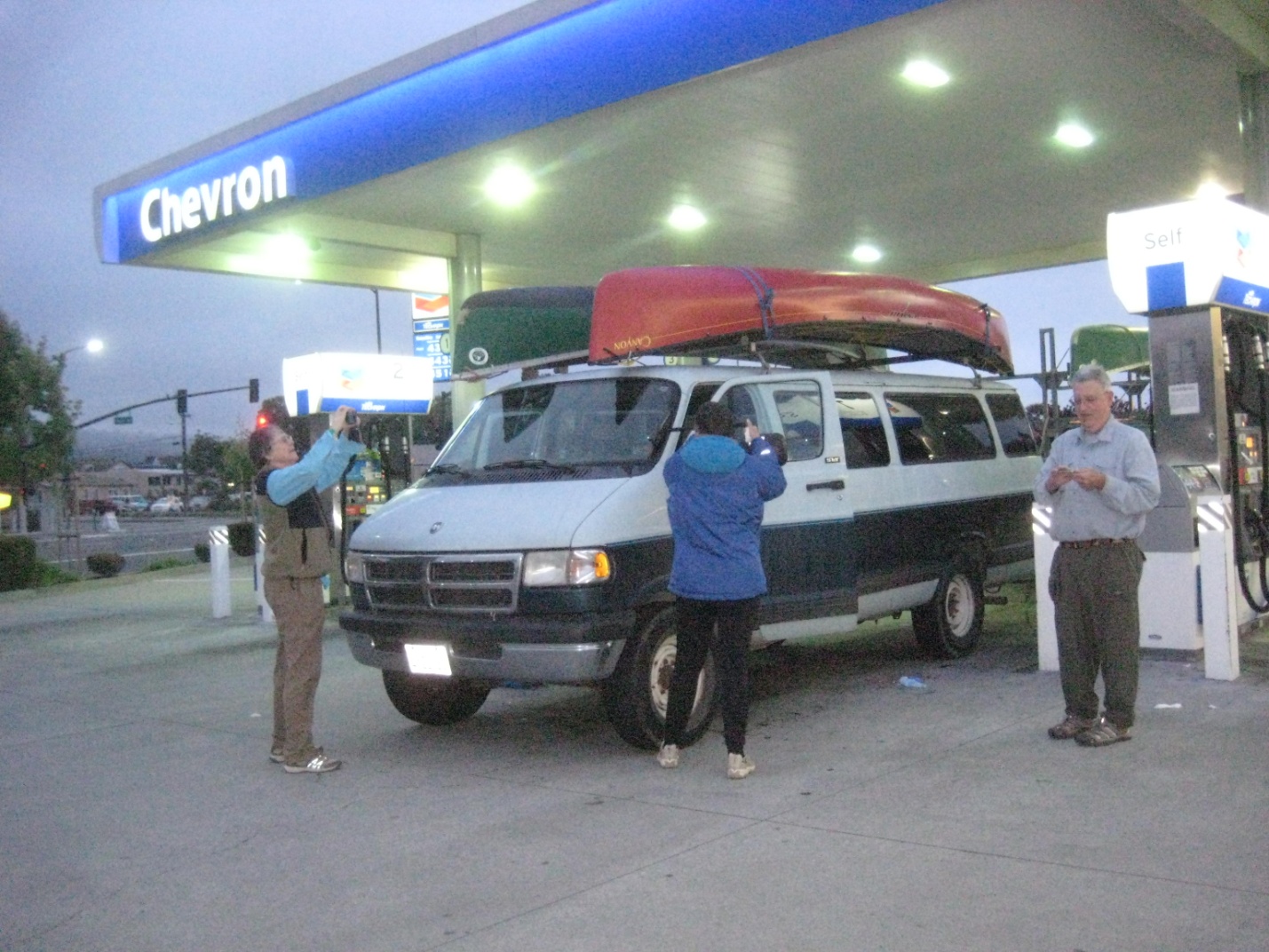
In the morning we stopped for gas.
Lo, when we stopped at the Ukiah Chevron, there in the store, enroute to the restroom, was a rack of Parducci. With my donut and coffee I bought a Pinot Noir.
After dinner, just to show they could do it, Bill and Jeff went to work with a found fire-starting kit: strung bow, small stick and a log. They got pretty hot with their efforts, but no actual flames resulted. Next time.
It’s gotten dark and voices are quieting. Though only 9:30 it’s time to sleep. Near the groover I gathered some mugwort leaves that are now crumpled inside my pillow case. I’m hoping to experience delicious dreams.
5/27, Sunday, 8:42PM
After dinner, pausing near the 3-paddle hand wash tripod, Karen exclaimed, “What a beautiful day! A lovely area, great water and a group of wonderful people – not a lemon in the bunch.” Yep, a perfect holiday. Unfortunately, however pleasant it is to experience perfection, it’s dreadfully boring to read about; don’t worry, in the rest of this report every effort will be made to focus on the misery we experienced.
It began before 5am when the damn birds began to chirp and call. The groggy campers, trying hard to sleep off their sacraments, began grumbling and mumbling in their tents about 5:45. Everybody was awake and moving about by 6 – on a Sunday morning! Of a three day weekend!
Before long Charlie, Thank God, had the coffee ready. That helped. A little. The cheap club hasn’t bought a new pot in forever and has no insulated thermos. The old pot’s small. Good for about 2.5 mugs. Then Charlie throws out the grounds and brews a new batch. No complaints about freshness – never does POST coffee stand for even five minutes. There is a social benefit to the coffee back-up – a lot of folks get to stand around – and grumble together.
To their great credit the volunteers who set the meals out on these “tables” do an outstanding job. This morning Wit served up creamy polenta with sausages. He even gave us a choice of meat: chicken, or beef. And laid out bananas, OJ and mango juice as well.
Kit, who organizes the trip, is a really nice and effective woman. The first time I paddled with her, on the Carson back when Bill Hitchings was along and we forgot our utensils so whittled replacements, she yelled at me. Everybody gets excited when they think they’re about to swim, especially in the icy Carson, and as a professional teacher she knows the importance of clear speech. Thanks to her corrective comments I didn’t tip us. Everybody knows she’s all about saving our asses, especially from wind.
She’s not afraid of wind but sure doesn’t like it. She knows it’s likely to come up about 1. She’s good at math, so told everybody yesterday, “We’ll leave at 8:30.” In most groups, like that motley, sun-burned bunch we passed, do you think even one of them gets up by 8:30?
Well, our groover was packed by 8:15, every boat loaded and ready by twenty-five after, and all headed downriver at 8:30. Kit for President!
Despite one comfort stop and a minor emergency when Karen’s dog, Snowy, jumped ship and she followed him into the drink, we pulled out at our Basin Creek lunch/camp site at 11:30. Pretty grueling, eh? And on a holiday Sunday! And we call this fun.
Kit beat the wind so badly it didn’t bother to come out for the whole, lovely day. It just sulked. And planned its revenge.
This group expects to spend the day canoeing, so everybody was pretty much at a loss when lunch was over and there was nowhere to paddle. I just set up my tent, as close to the waterfall as possible, crawled into it and went to sleep. The birds are quiet when there are few people to disturb, so I slept soundly.
When I awoke, there were a couple of people sitting in the shade near the creek. Out by the river I saw that the sun-burned amateurs from Garberville and Redway were sprawled out on the up-river end of our beach. They were breaking for lunch, or maybe breakfast. They aren’t early-risers.( Last year they beat us to Basin Creek by 12 hours and when we arrived at lunch time, they were just breaking camp to paddle into the fierce head wind that was blowing. They left us a smoldering fire and some trash.)
Out on the river Bill Behrendt was standing in his canoe with his arms out-stretched in a crucifixion-like pose. I don’t know his sect, but I figured this is how he worships when he can’t get into his regular church. Alice was sitting in the boat with him. He was holding some kind of a sheet in front of him and the canoe was making rapid progress up-river, something none of us ever manage to do on our knees. As I stood there awestruck, Mary, Bill’s wife came over to me and explained that Bill was sailing his boat. Like suggested earlier, these people will do anything to spend the day in a canoe.
Though Kit’s planning precluded the need to paddle after lunch, some others beside Bill found reason to use their boats anyway. After I awoke, I saw a few of our people and their boats on the far shore. Since there was nobody to be seen on this side, I decided to join them. I would have paddled across, too, but my boat was upside down under the Coleman stove in the kitchen. The day was warm, my clothes fast-drying, so I just swam across and joined up with Bob and Joan, Pat and Eileen, plus Jim and Barbara. They knew there was an old railroad trestle a ways downriver so we all marched on, wading through poison oak and thorn-covered wild roses. Beyond the thicket was a long stretch of dry beach that reminded me of the Sahara. Finally we made it to our goal and it was awesome– a four-story construction of creosoted magnum telephone poles and tie-thick cross-pieces. On the flat top small trees were growing up between the long unused tracks.

Bridge Beam
Bob and Jim assured me that last year they climbed to the top and declared it was my turn today. I respectfully replied that as I had no trestle-climbing experience, I would need modeling to meet their challenge. We men continued our talking without touching a timber, but soon Eileen was grinning down at us. You can see her and Alice’s snakes, too, on FLIKR at
We all made it back to camp for a delicious dinner by Jim and Barbara, featuring a fruit accented salad. Later, Bill, who, after sailing with Alice, had climbed with her up into the creek canyon, offered to lead me up those slippery slopes. I was reluctant. He’d made the trek once already, and I’d done my best to be sure none of that Chevron Pinot Noir was wasted, and worried I might be. But Amy, who’d also hiked up earlier, encouraged me, declaring the canyon was spectacular, Bill was eager, and I hadn’t fallen down when I went up the precarious, if short, slope to my tent.
Up one ledge and Bill stripped to his skivvies.

Basin Creek Hike? Swim? Climb?
Where he couldn’t climb, he intended to wade or swim. And he did.
He watched carefully to be sure I placed my fingers securely as I inched, one finger hold at a time, along the vertical stone walls, and so guided me up several ledges and past two or three beautiful pools. We stopped only when we reached a narrow, tiny, straight-sided canyon holding a long, deep pool. At the far end was a skinny opening through which we could see a high waterfall. Bill started to scale the left side, then lost his hold and flopped into the stream. “Next time,” he concluded. “We’ll bring ropes.”
Monday, 5/28/12
While nobody could really complain about the weather yesterday, or anything else, what with there being no wind, a lot of sunshine and generally perfect conditions for the paddling we didn’t need to do, today’s weather fulfilled our need for real misery. Like yesterday, everybody was clamoring around camp soon after dawn. Shawna and Vince served up hot oatmeal with at least half a dozen optional add-ins, like blueberries, cranberries, raisins and raw sugar. It was the perfect preparation for launching into the fog and cold.
An hour or so into the four hour paddle to take-out, Kit’s wind kicked up. It spent yesterday, like we did, resting. No rest for it or us today. As Buckminster Fuller noted, wind isn’t blown. It’s sucked. While the cold Pacific Ocean air and fog was being sucked hard and fast toward Redding and the whole, hot Central Valley, we sorry paddlers shifted into survival mode. Charlie, up until now soloing in a full-size, gear-filled boat, now become a broadsided barge, teamed up with Alice. She paddled bow and together they managed to move the barge and tow her not so aerodynamic Kopapa.
Kit’s shoulder began to hurt so we beached and began to walk our boat toward the take-out. While she pulled on the bow painter, I kept the boat off-shore by pushing on it with my paddle. This four-footed approach to canoeing worked very well, and we strolled an easy mile down the long beach. Across the river others were also walking their boats. But a few kept paddling, including Jan Lockie, who kept her inflatable on course. Awesome, Jan!
When we stopped to devour Pat & Eileen’s lunch, we all fled the windy river and retreated back to the forest edge. Fortified with their good food and cookies, we got back to work and pretty soon made it to the low-bridge take-out. As soon as possible everybody packed up and drove off. Before heading for the highway a few made plans to meet for pizza in Healdsburg.
Rolling down 101 all of us in the van suddenly start. There’s a very loud, slapping sound coming from the right rear. Don slows, then pulls onto a wide shoulder. We all gather round the suspect wheel. It isn’t flat, but no lens is needed to see the problem. A BIG chunk of rubber has ripped off the tire, exposing the shiny steel belts.

This is why we have steel belted tires
Clearly, we need to put on the spare. But unfortunately that was done Saturday, when the original tire went flat. The tire we’re staring at is the spare. A look around reveals lots of trees, the Russian River and not a single building, let alone an open tire shop.
Don decides to roll on, carefully and slowly in the right lane. We all (Jan, Sally and the pizza crowd) wait for the blow-out, hoping it doesn’t come above a cliff. It doesn’t. We turn off the highway into Cloverdale and drive the main drag, hoping against all logic to spot that tire shop open at 6 on Memorial Day. At the far end we pull into the Chevron and begin calling and walking to nearby café’s seeking help. The Wal-Mart in Windsor is closing and taking no jobs. AAA has no local tire changer. Don reaches Eileen, already at the Healdsburg pizza place. She and Pat return and pick-up Jan and Sally to take them to their car in Novato. The rest of us order rooms in the Super 8, then sit down for pizza, and tell stories of other aborted trips. We laugh a lot.
Next morning Don and Jim find an open shop and get a good used tire. By mid afternoon we’ve all gotten out personal gear into our cars, or Don and Karen’s garage, and caravan to the 9th Avenue storage site to stow canoes, stoves and such. We’re late, have missed a day of work, and look forward to our next miserable adventure.
Russian River, May 5th, 2012
This time of year I am overwhelmed by a powerful rush of longing to sit by a river and worship the movement, the smells, the sound of rushing water over rocks. To skip the drama, blow the suspense, ruin the punchline: Charlie and I didn’t swim on this trip but we did a stupid portage. A stupid portage is any portage you have to make because you’re lost and can’t find the water.
Trip leaders, Chuck and Jan with their kids Jake and Ruth had been up at the River since Wednesday. They had rented a cabin in Gurnewood Park at the last minute because the weather was threatening and camping and cooking in the rain gets old. So they sat out a huge thunderstorm in a cozy little cabin and got to boat together for one day in the wind. We left our house in Berkeley at 7 AM with Dan and Martha following behind in their car.
When we pulled off the fwy at Healdsburg Avenue, they were on the left filling up at the Chevron. No one was in desperate need of pastry so we decided to go straight to the put-in. I missed the fwy return, I swear there were no signs with arrows anywhere near the access and we ended up taking the main drag all the way through town and out to Alexander Valley Road where we took a right to go the Alexander Valley Campground. The road runs parallel to the freeway so I only felt lost for 30 seconds right before the turn off to Alexander Valley Road appeared. We were a little early at the campground. We drove around the empty campground and found the trail/road down to the river. Then we got out of the cars and wandered around, paid our access fees and waited for about 10 minutes before Chuck and Jan showed up.
Oh, frabjous day! To be fidgeting at the put-in on a day radiating goodwill and sunshine! To see plenty of current and no wind! Life is good! It’s a short shuttle of approximately 7 miles from the campground to Healdsburg Memorial Beach County Park. The river takes two wide goose-necks to arrive at the park so it is a 14 mile paddle. While we waited, Yukon, Jan’s white Lab, a water dog to her cheerful core, chased sticks into the water and frolicked around greeting everyone and joyfully spraying water when she shook off. Kuda, not a water dog, stood close to Dan looking worried. Later in the boats the two dogs went to sleep. Jan, deferring to Charlie and I in our elder statesman roles asked us to be Lead boat. Russian River in this section is a class I, a river that you can usually get down safely with a minimum of difficulty. Charlie and I have been the sweep boat for so many years that being out front was a strange experience, but we agreed. We were flattered. It was really hubris. The water was high and posed a set of problems for us that we didn’t solve very well. It started at the first “rapid”. When the river is low for a year or two, the shore grows a thick line of willows, impenetrable by any living creature except minnows. When the water is high, as it would most likely be in the spring after a big rain, the river carves out the sand and gravel from around this line of shrubbery and leaves most of it standing, a hedge-like picket fence in mid-current. Its not too bad if the current is flowing parallel to the hedge but this isn’t always the case. This day the swift current was running at a diagonal or in places at 90° to the fence. This is very dangerous. It is very difficult to avoid the brush and if you get tangled in it your boat is far too likely to flip (counter-intuitively you have to be sticking your head into the brush to protect the boat) and if you flip, a swimmer is at great risk of being overwhelmed by the current that will shove them into the strainer and under water. Its called a strainer and is very ugly. Within minutes of the put-in the bulk of the current plunged left into a deep undercut bank and disappeared around the beginning of a 100 yd long picket fence of willows that marched into the vague distance where it vanished. River right was covered with a long wide gravel bar and a shallow pool. We didn’t like the looks of the left channel because we could not see through the willows and the undercut looked recent enough that there could easily be a stump, tree, or for that matter a school bus hiding from our sight. Our other choice was to see if there was a break in the willows at the bottom end of the fence. There was enough current to make the second choice look safer than the speeding unknown into the dark of the first so Charlie and I paddled into the wide area above the picket fence looking for a break. Well, so much for plans; the current rushing out of the pool was a lot faster than we expected and there didn’t appear to be any breaks in the picket fence and there was a hidden gravel bar upon which we grounded the bow of the boat and spun around facing upstream paddling furiously in three inches of water to avoid being swept into the fence. The water was so shallow I thought about hopping out and grabbing the gunwale but knew that if I did that there was a pretty good chance that the lightened boat would float off the gravel before I could get a grip on it and Charlie would be swept into the sweeper without any help from me. In our one expert move of the day, we pushed off the gravel bar, pivoted neatly in place so we could see where we were going and darted quickly through a slot in the willows that only reveled itself at the last second. Whew. Not a big deal, but not an auspicious start either.
We looked back to see Jan, who was paddling with her daughter, Ruth, in the bow. She was standing on the shore scouting her next move and the rest of the group was scattered out in the pool above the mess of willows. Everyone safe. Yay.
As we drifted downstream below the willow fence, a nice wide slot appeared in the willows and we pointed it out to our followers and everyone made it down OK. We made another similar half baked decision at the next challenging spot, whereupon I asked Jan, “Are you sure you want us to be Lead?” “No, no, you go ahead.”
The nice thing about being Lead boat is that you get to see all the critters before they get scared off by the boats. We saw an otter on the shore as it scampered into the water. I was reminded of a salamander as the otter’s black form slipped out of sight. After lunch the river messed us up again. Chuck was concerned about the wind and he and Jake in their solo canoes, took off ahead of the group, leaving Jan and Ruth, Dan and Martha, Alice in her kayak and Charlie and I in the lead again. This time the scary undercut channel was on the right; a big fat current flowing into brush and then the unknown but the left was a smaller channel but still with a lot of moving water in it. We thought we could get out of it if it turned out to be a downer but we shot down a steep chute through some willows so that we were committed to this route. We signaled Alice, Jan and Ruth to wait before coming down. Dan and Martha were far enough upstream that they took the right chute. The river got thinner and thinner until it narrowed down into a swift channel racing diagonally through three or four rows of willows at such a speed I wasn’t willing to risk it. There didn’t appear to be a safe zone and failure could be a big problem. That left us committed to a stupid portage. We were on an island and there was no place to go on the left and the right hand channel was protected by a six foot thick barrier of willows. We stomped randomly around looking for a short stupid portage and eventually found a break in the willows that allowed us to put one boat at a time into the water. Jan and Ruth portaged a little bit upstream of us. We caught up with Chuck and Jake who had taken the better channel and ended up waiting for us for a half hour while we sorted ourselves out. Chuck’s comment was, “Yeah, there were some spots that were a little ambiguous.” Charlie and I sheepishly surrendered the Lead to Chuck and he led us quietly downstream.
On Thursday, Ruth, on one of her first solo canoe adventures, had been buffeted by the wind to the point of flipping. Jan said she was side-surfing a wave in the middle of a pool with no current; the wind had whipped the water into a Class II. Today, while there were a few sections where we were bullied by upstream winds, most of the time it, if it blew, it blew downstream.
We drifted into the more residential area of Healdsburg and took a stretch break on a beach lined with small cottages. We arrived at the take-out in Healdsburg and carried the boats up the hill and then got the cars and loaded them. Alice went swimming and picked some lupine from a patch that grew between the pedestrian bridge and the auto bridge. This patch is mentionable because it was a huge, thick mass of intense purple that was clearly cultivated, its edges square and nothing else was growing within its border. It stood out like a flag laying on the shore.
We took Dan and Martha back to their car at the put-in and then Charlie, Alice and I followed Jan to Guernewood Park. We sat around catching up and chatting until dinner. Charlie and I went home and Alice spent the night. On Sunday we all joined up again at the Sonoma County Fairgrounds to watch Joann O. running her dogs in the Dog Agility Contest. But that is another story.
Eric on Horses
Horses II
by Eric Rasmussen
Some years ago I read a story about a man who, though in his seventies, was embarking on a study of Italian. Besides the challenges of age, this fellow also faced those of living in a dangerous ghetto. Throughout his life he had studied languages, though, and so he continued, sure that once again the rewards would merit the difficulties. That story has always inspired me. My adventures in learning to ride horses are not courageous. I am devoted to avoiding pain and injury. In fact, that devotion is proving an obstacle to better horsemanship.
Both of my instructors, first Michele, and now Christina, must repeatedly remind me to look where I want to ride, as well as to tap the animal’s belly with my boots and move the reins to confirm my desires. It’s about intention. Clear intention. The rider, not the horse, must pick the route. The rider also conveys to the horse the speed and direction of the travel.
These instructions are simple. A child ought be able to follow them. And many can. The barn is full of young, good riders.
But my progress in this area is slow. Despite the many, many reminders uttered on many different days, I persist in looking not at the far wall or the next red cone, but at the back of Annie’s head. “Is it going where it’s supposed to?” I habitually inquire.
With the continuation of this misbehavior, the subject gets attention in between rides. Early on I realized that watching is what I always do, in place of leading. Perhaps this pattern started in childhood. When I was very young, my mother took discipline seriously. From these lessons of hers I’m not sure I learned to behave better, only that I found it wise to watch her carefully. For example, I only told her about my recent activities when she was driving in traffic and I was seated behind her. The back of her head calmed me.
I’m now hoping to learn to look way beyond the head in front of me, and ride boldly into an exciting future, certain the horse will get us both there.
9/27/11
Every lesson is a different adventure. As is every river trip with my whitewater canoe club. And in part for the same reason. Each outing promises the possibility of great injury or death. Neither is likely, and enormous energy is devoted to reducing the risks. But they still remain. And at the ranch they are displayed in black and white. Just inside the gate, and a little ways past “Sign the release before entering” are two new signs, about the size of those “Slow for Children” ones in neighborhoods. One is ”Horses Bite and Kick.”
10/5/11
Before yesterday’s lesson even began a horse did bite and kick. It was standing close to the pasture gate that I unchained and pushed open to go out and get Annie. When Annie and I returned, this gray-colored mare was still at its post. Once Annie and I were outside and I had her lead coiled up in my hand so her head was just above mine, I bent over to refasten the gate, Suddenly the gray mare leaned over the fence and snapped her teeth shut inches from Annie’s brow, missing flesh only because Annie jerked back. I immediately remembered that on my very first morning with Annie, Michele taught me to hold the lead coils so that if the horse pulled suddenly, as Annie just had, my fingers would not be caught up and wrenched. I was doing what I was taught.. My fingers are fine. Thank you, Michele.
Up at the barn I reported the excitement at the gate caused by the new mare. Michele, who was standing near a small, lively white horse, quickly responded, “That’s Tess, the mother of this colt I’m weaning. She’s not new.” Then she sternly added, “You need to learn to know every horse in that pasture. Every one.”
The ranch, rural and pastoral as can be, is not a place for a brain in neutral. Appearances and smells of hay and manure to the contrary, it doesn’t have a slow lane.
Dec. 7, 2011
Yesterday the plan was to ride in the round pen. For the previous two or three lessons Christina wanted me to lope Annie. Loping is running. It’s beautiful to watch. And once, I had managed to get Annie doing it. What fun – more exhilarating than Disneyland!
But since then Annie had been stubbornly picking her own routes across the arena, or just slowing down, if not simply stopping. Christina reasoned that if we were in a more confined venue, the round pen (which is less than a quarter the size of the arena), there’d be less to distract Annie, or me. So we rode directly there.
While warming Annie up I encountered some of the familiar stubbornness, which I tried to overcome with firmer reining and foot pressing, plus my usual talking to the horse. Christina did quite a lot of talking to me, much of it along the well-ridden lines of “You’ve got to be black and white with her. If she doesn’t do what you ask, wake her up with a hard heel. She always does this with students. You’re not going to hurt her.”
I tried to apply Christina’s lessons and got some improvement, but it wasn’t consistent, which was, of course, because I wasn’t consistent. I was in the gray zone, and Annie knew it. She would trot, a little, but loping wasn’t happening. And every time Christina would start to talk, Annie would slow down and walk over to her, like She was the eager student! It did seem that the horse was making the most progress.
Realizing I needed more than a verbal picture of what to do, I asked Christina to ride Annie and demonstrate. Sure enough, she was hardly in the saddle before the stubborn, pokey horse was speeding around the pen in a lovely lope.
And it’s not like Christina is a big gorilla terrifying the horse into obedience. To accommodate her much shorter legs, I needed to raise the stirrups four notches for her to ride Annie. She’s petite, and often encourages me to use my strong legs. Like with Judo, she was, with skill, doing what my strength did not.
Fascinated, I watched. The most striking thing to me was the silence. Christina didn’t talk to Annie. Without a word she told the horse to fly her round and round. Amazing! It wasn’t easy to see the footwork that carried her wishes. There were no flailing boots. She wore no spurs. I did see that she produces the lope by pressing and rubbing her heel against Annie’s belly in a certain area.
After Christina dismounted, and reinforced the demonstration with some more verbal explanation, I asked her to remain silent while I took Annie for a few circuits round the pen. I wanted to be able to work through her instructions as I rode, without the confusion of additional input. She agreed.
Underway, I felt different. I wasn’t trying to coax Annie, or be loving. Like Christina, I wordlessly communicated my wishes with my legs. When Annie hesitated, I quickly used my legs to repeat, with more conviction, my intent. She responded and trotted quickly round the pen. When we stopped, Christina generously praised me.
Then I gave Annie the lope command, and she loped! Amazing! Suddenly she was running – with ME on her! As she loped, I laughed with delight. Her speed was exhilarating, and I was delighted that, finally, I had learned to lope. Yeah!!!
Afterwards I thanked Christina profusely for her patience and skillful persistence, then petted Annie’s neck and fed her all my carrots.
 Kit Hewitt -- There are no rules to this game;